Right now, you are probably breathing more through one nostril than the other. Your nose keeps a secret schedule.
What happens inside your nose?
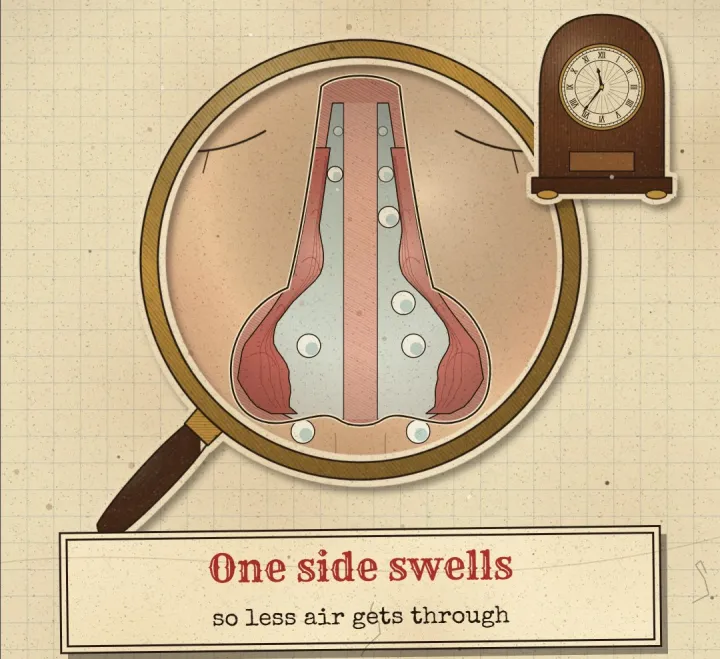
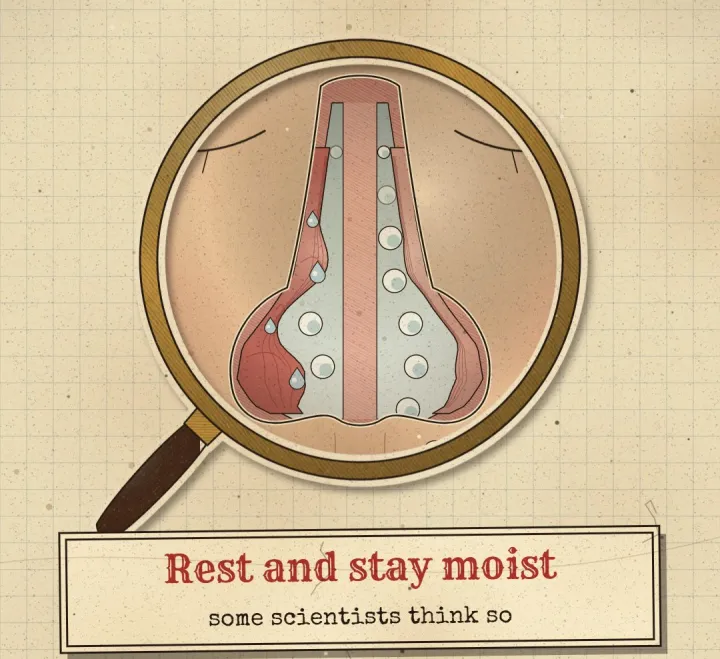
Inside your nose, soft tissue on one side fills with blood and swells. That side gets narrower, so less air gets through. Every few hours, the two sides switch.
Why does nobody notice?
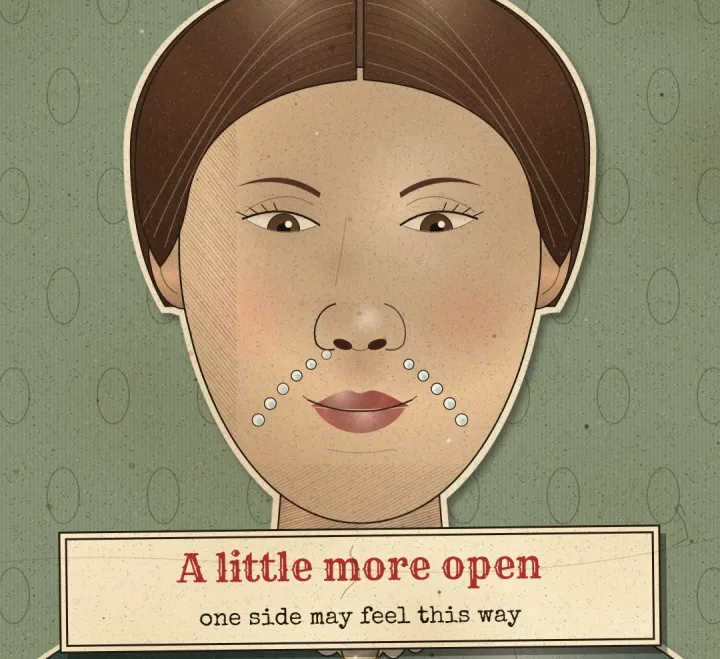
Usually, both sides together let in about the same amount of air. So most people do not notice the switch. With a cold, the narrow side feels blocked, so you notice it more. Press one nostril shut and breathe in, then try the other side. One side may feel a little more open than the other.
Why does your nose do this?
Some scientists think the switching lets each side rest and stay moist.
One more thing
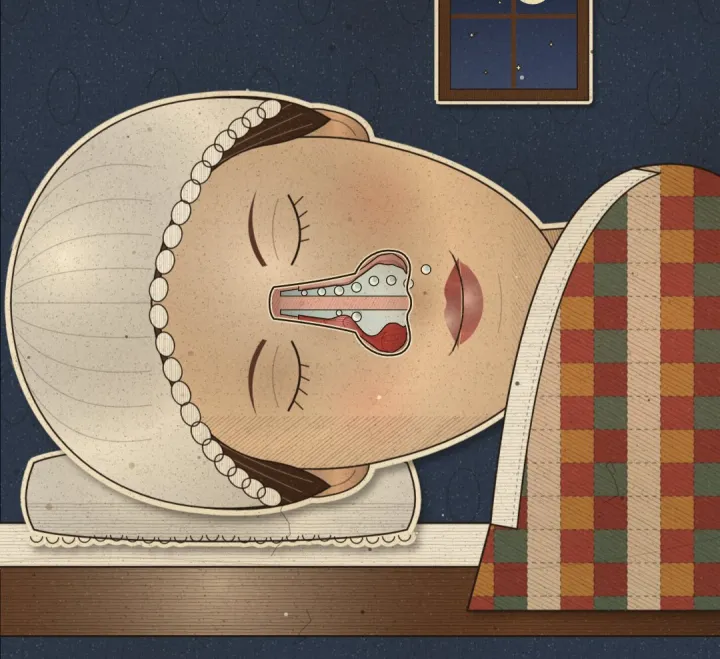
When you lie on your side, the lower nostril tends to get stuffier.
Sources
- University of Texas Medical Branch, Medical Discovery News: Little Known Nose Facts
- BBC Science Focus: Here's why only one nostril gets blocked when you're sick
- Cleveland Clinic: Why Do I Sometimes Get Congested in One Nostril?
- PLOS ONE, 2016: Measuring and Characterizing the Human Nasal Cycle
- Mayo Clinic Proceedings, 1977: The human nasal cycle
- Annals of Otology, Rhinology and Laryngology, 1986: Posture and the nasal cycle
- Allergy and Asthma Proceedings, 1996: Nasal physiology: neurochemical receptors, nasal cycle, and ciliary action
- Journal of Laryngology and Otology, 2018: A simple, quick, validated method of recording the nasal cycle in humans using a subjective scale
- Journal of Laryngology and Otology, 2016: A model for the central control of airflow patterns within the human nasal cycle
- Rhinology, 2018: Comparison between unilateral PNIF and rhinomanometry in the evaluation of nasal cycle
- European Respiratory Journal, 1996: A role for the nasal cycle in respiratory defence
- Stanford Magazine, on Sobel et al., Nature 1999: The science of smell (used only for a dropped claim)
- Rhinology Online review: Rhinology Online review (Pendolino et al. 2018)
- Archives of Otolaryngology: Archives of Otolaryngology (Van Cauwenberge and Deleye 1984)