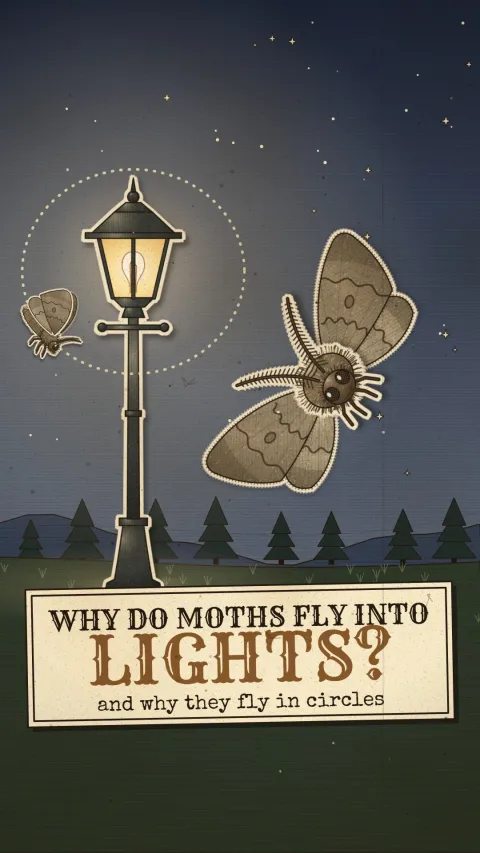
A moth circling a lamp is not actually flying toward the light. The reason is right above its head.
What did the cameras show?
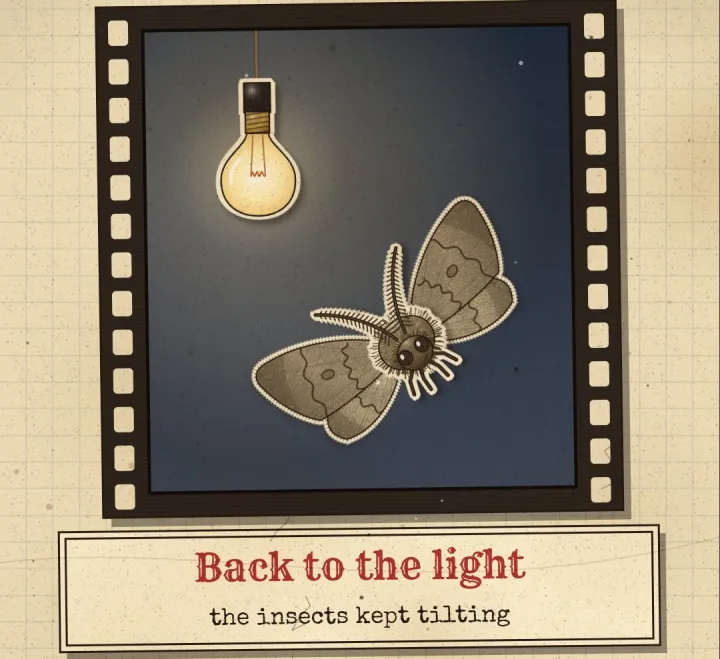
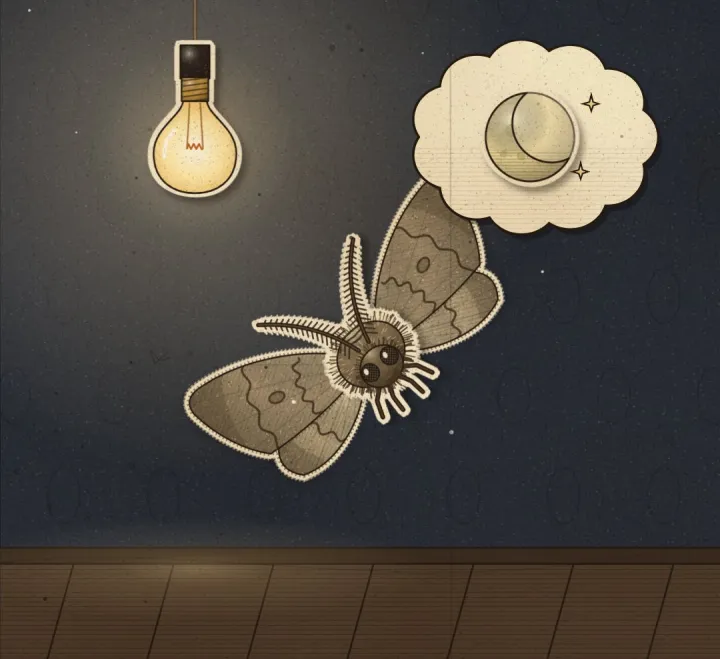
Scientists filmed insects flying around lights with super fast cameras. The insects kept tilting so their backs faced the light. That did not match the old idea that moths mistake lamps for the Moon.
Why would they do that?
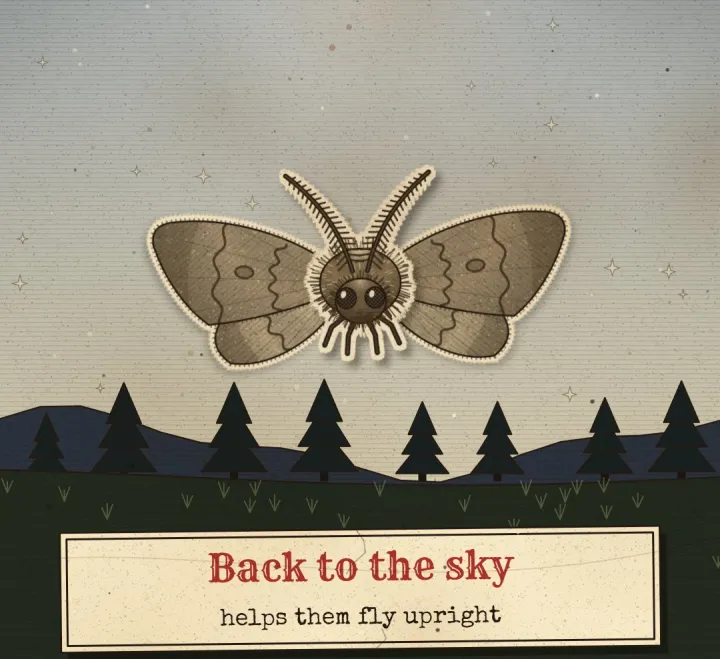
In nature, the brightest thing an insect sees is usually the sky. So keeping their backs facing the bright sky helps them fly upright. Near a lamp, they tilt their backs toward it instead.
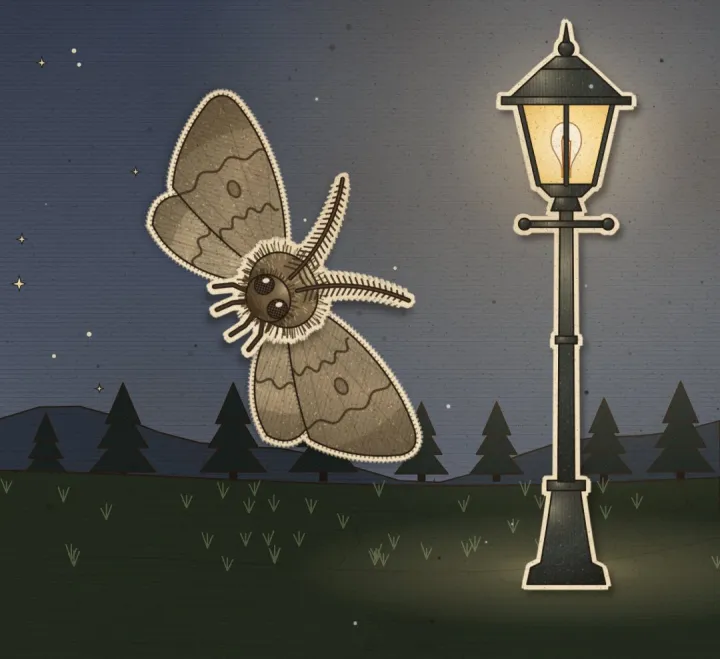
What goes wrong near a lamp?
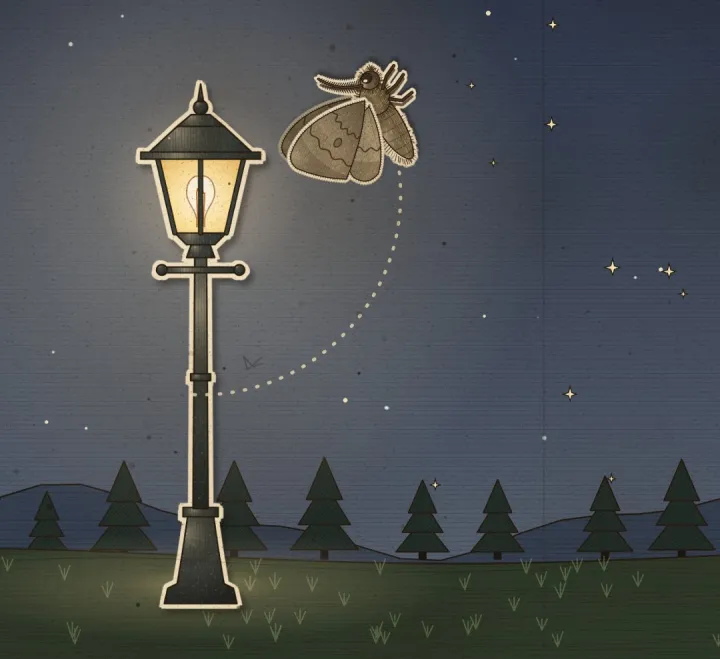
Some end up circling the lamp again and again. Others climb steeply, slow down, and stall in midair.
One more thing
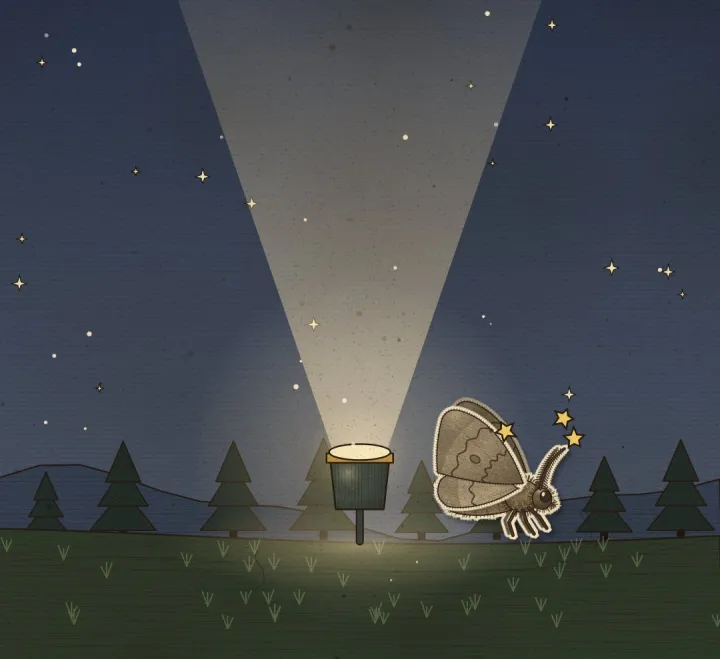
If the light comes from below, some flip upside down and crash into the ground.
Sources
- Nature Communications: Fabian et al. (2024): Why flying insects gather at artificial light
- Imperial College London press release: Flying insects become disorientated and trapped by artificial light
- NPR: 'Like moths to a flame'? Here's what's going on with insects and porch lights
- Science News: Insects flocking to artificial lights may not know which way is up
- Mongabay
- Scientific American