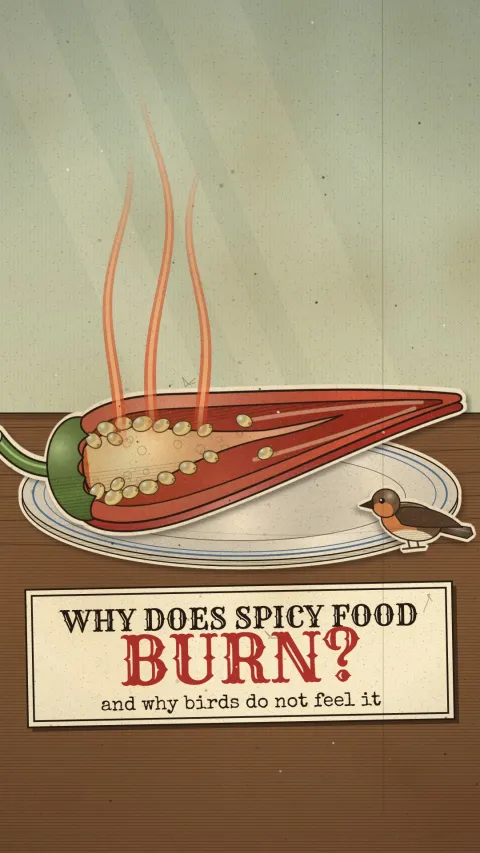
The hottest part of a chili pepper is not the seeds. And not every animal can feel its fire.
Where is the fire?
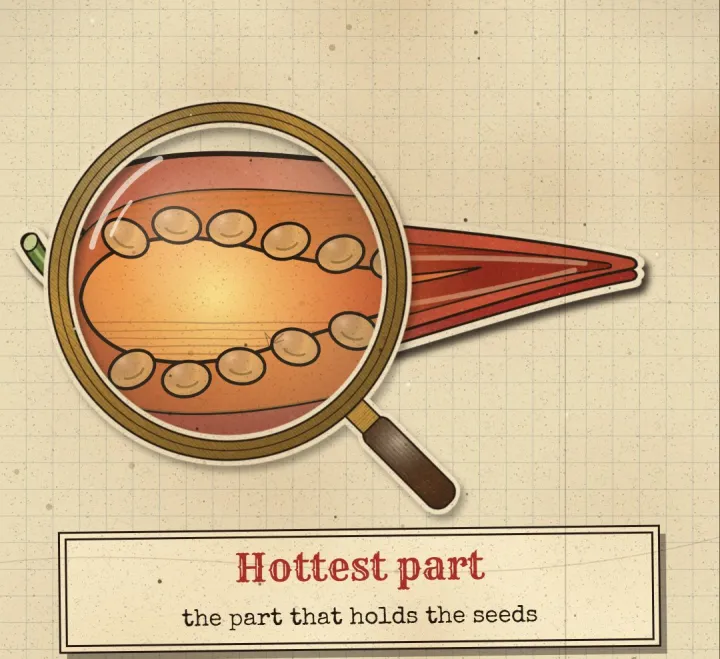
The burning chemical is packed into the part that holds the seeds. The seeds have less of it, even though they sit right on that part.
Why does it burn?
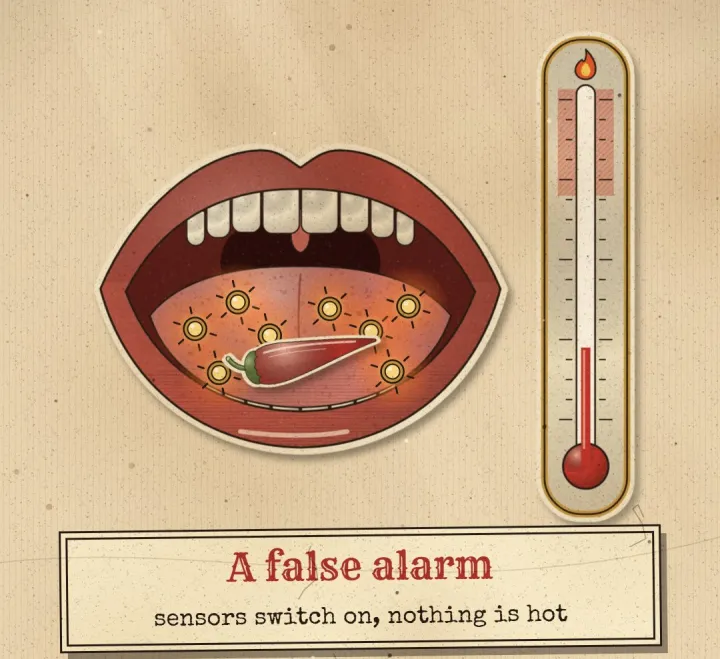
Your mouth has tiny sensors that warn you about painful heat. The chili chemical switches them on, even when nothing is hot.
Why does water not help?
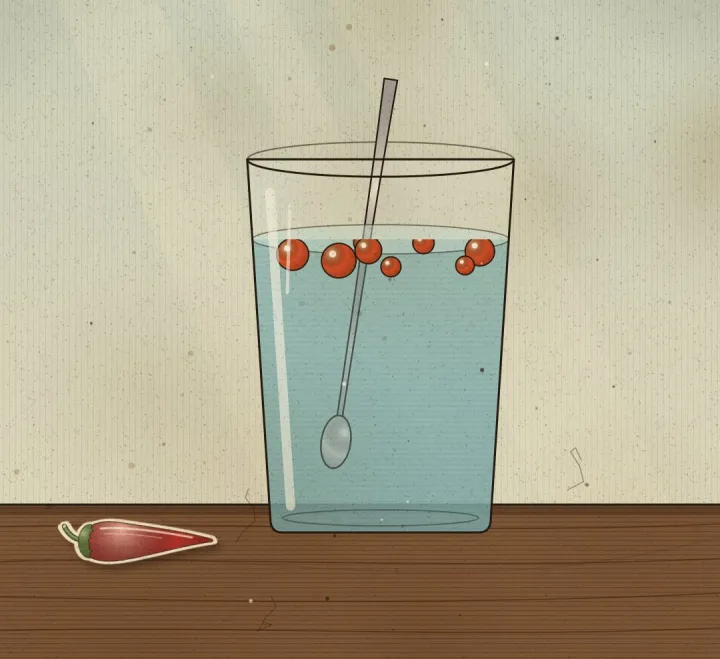
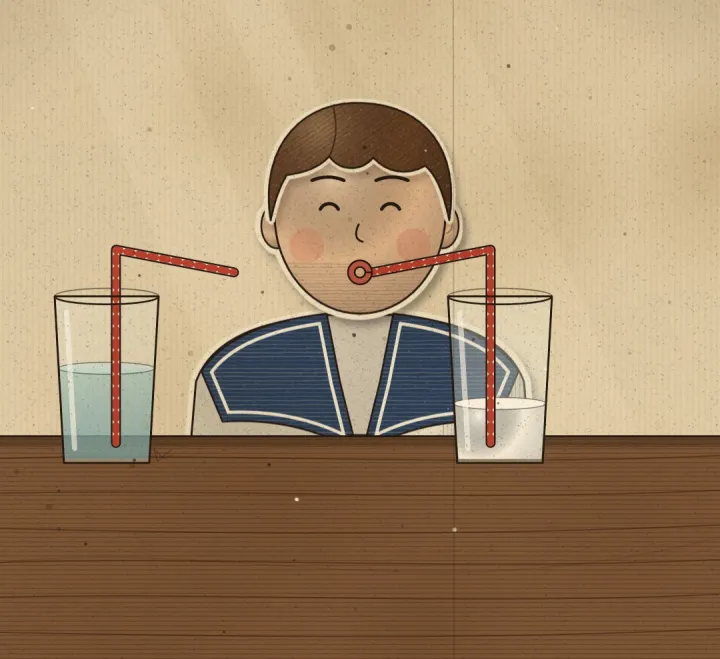
The burning chemical does not mix well with water. So a sip of water does not help much. A glass of milk works better.
One more thing
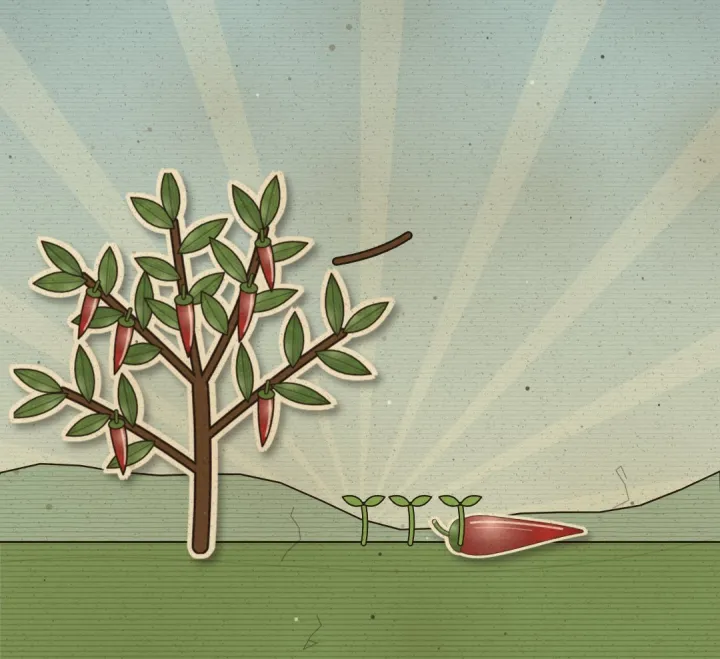
Birds do not feel the burn, so they happily eat chili peppers. They spread the seeds, and the burn keeps away mice that would chew them up.
Sources
- New Mexico State University, Chile Pepper Institute: The Chile Cultivars of New Mexico State University Released from 1913 to 2008 (Research Report 763)
- New Mexico State University: Researchers figure out how super-hot peppers pack their punch
- Metabolites: Placenta, Pericarp, and Seeds of Tabasco Chili Pepper Fruits Show a Contrasting Diversity of Bioactive Metabolites
- Food Chemistry: Capsaicinoids, amino acid and fatty acid profiles in different fruit components of the world hottest Naga king chilli
- The Nobel Assembly at Karolinska Institutet: Press release: The Nobel Prize in Physiology or Medicine 2021
- Nature: The capsaicin receptor: a heat-activated ion channel in the pain pathway
- The Conversation: Why doesn't water help with spicy food? What about milk or beer?
- Cleveland Clinic: Can Milk Relieve the Pain From Spicy Food?
- Penn State News: Milk: Best drink to reduce burn from chili peppers
- Penn State News: Proteins in milk, not just fat, may help reduce oral burn from spicy food
- BBC Science Focus: Here's what your spice sensitivity says about you
- University of Florida: For Peppers, "Hot" Quite Literally The Spice Of Life, University Of Florida Research Shows
- Nature: Directed deterrence by capsaicin in chilies
- Cell: Molecular basis for species-specific sensitivity to "hot" chili peppers