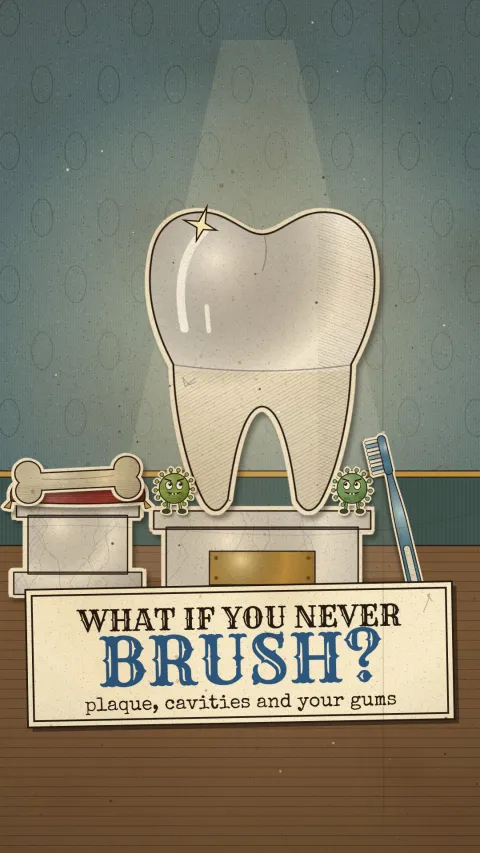
The outside of your teeth is harder than your bones. Yet tiny germs can still break through it.
Where do cavities come from?
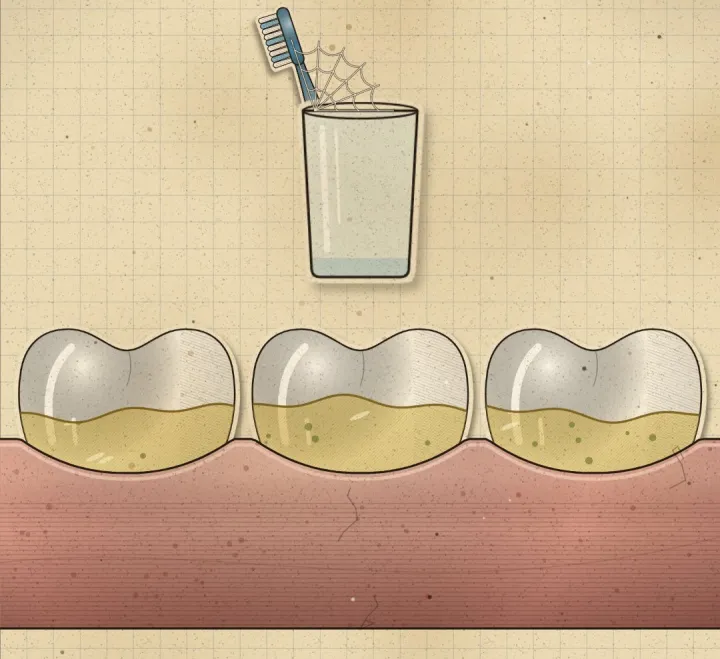
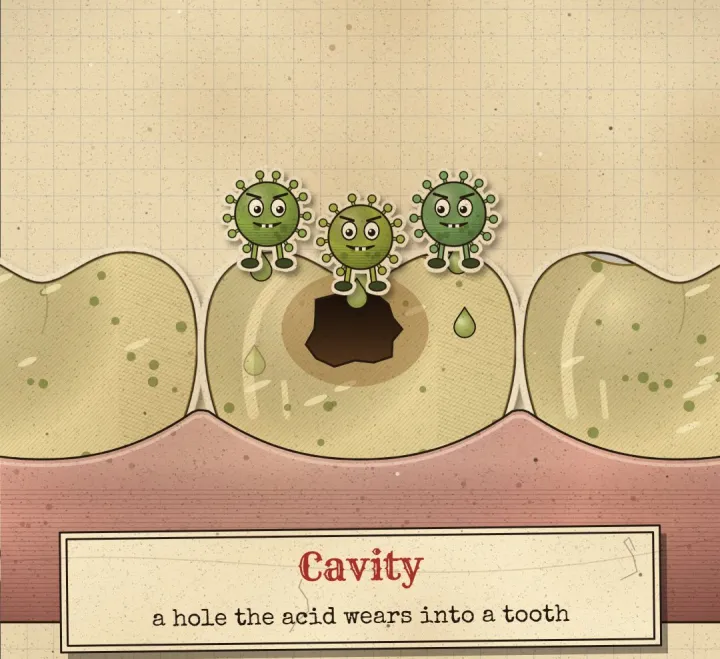
Without brushing, a sticky film called plaque builds up on your teeth. It is full of germs that feed on sugar and make acid. That acid slowly wears holes in your teeth, called cavities.
Can you brush it off later?
Old plaque can harden into a crust called tartar. Your toothbrush cannot remove it, but a dentist can.
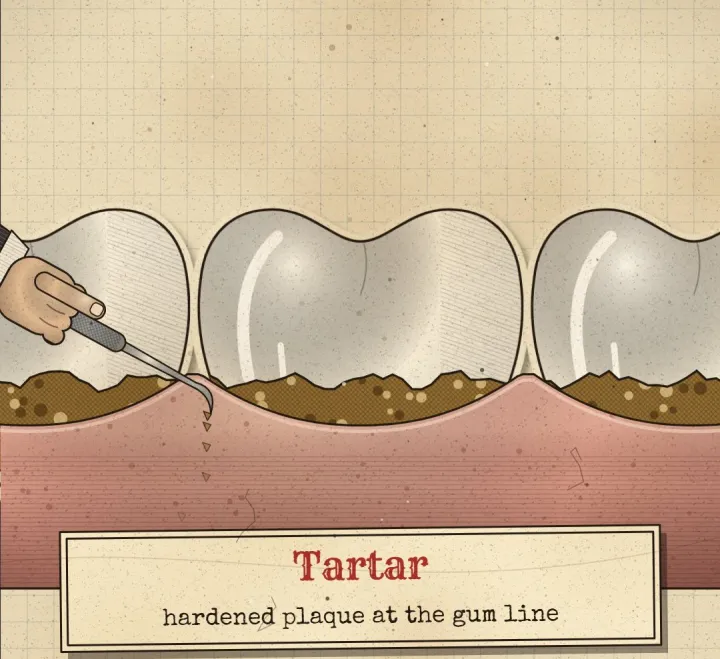
What happens to your gums?
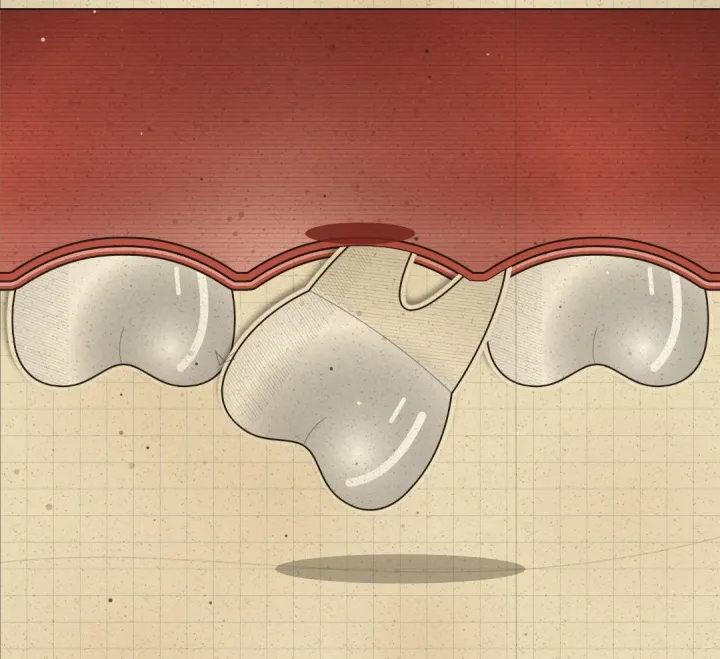
Plaque also makes your gums red and swollen, and they bleed easily. Your breath can start to smell bad, too. In serious gum disease, teeth can get loose and even fall out. If your gums bleed or swell, see a dentist.
One more thing
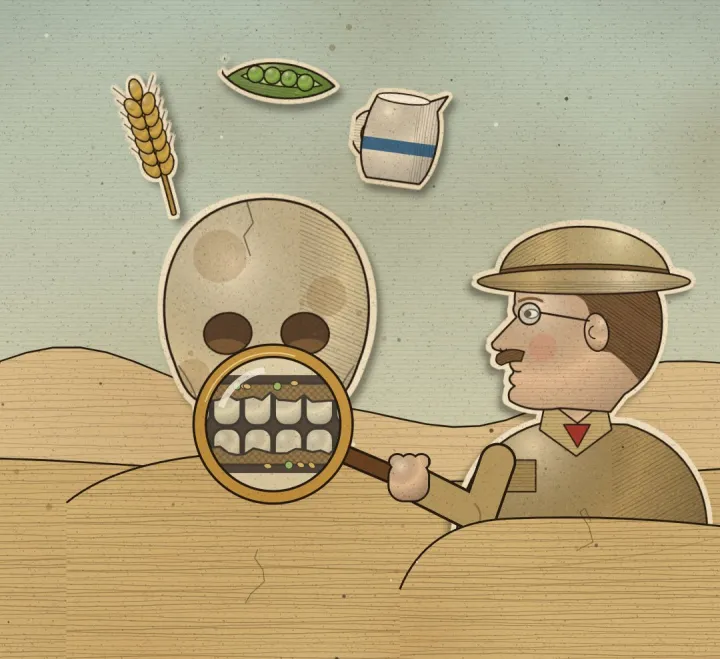
Ancient tartar can even show scientists what people ate thousands of years ago.
Sources
- Cleveland Clinic: Tooth Enamel
- Nature Communications, via PubMed Central: The hidden structure of human enamel
- American Dental Association: Plaque
- NHS: Gum disease
- CDC: Gum (Periodontal) Disease
- NIDCR: Gum (Periodontal) Disease
- Cleveland Clinic: The Sticky Truth About Dental Plaque
- Cleveland Clinic: Cavities
- NIDCR: Tooth Decay
- Cleveland Clinic: Tartar on Teeth (Dental Calculus): Causes & Removal
- MedlinePlus: Gingivitis
- University of York press release, via ScienceDaily: Research on British teeth unlocks potential for new insights into ancient diets
- Science News: Ancient dental plaque tells tales of Neandertal diet and disease
- Science News: Christina Warinner uncovers ancient tales in dental plaque
- Harvard Gazette: Researcher looks at plaque to gain insight about the past
- NHS: Tooth decay