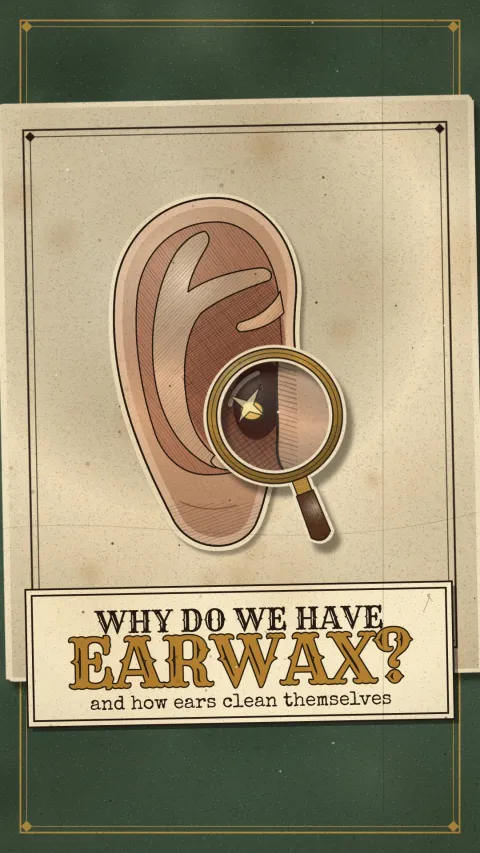
Earwax may look gross, but it keeps your ears healthy. Your ears even clean themselves.
What is earwax?
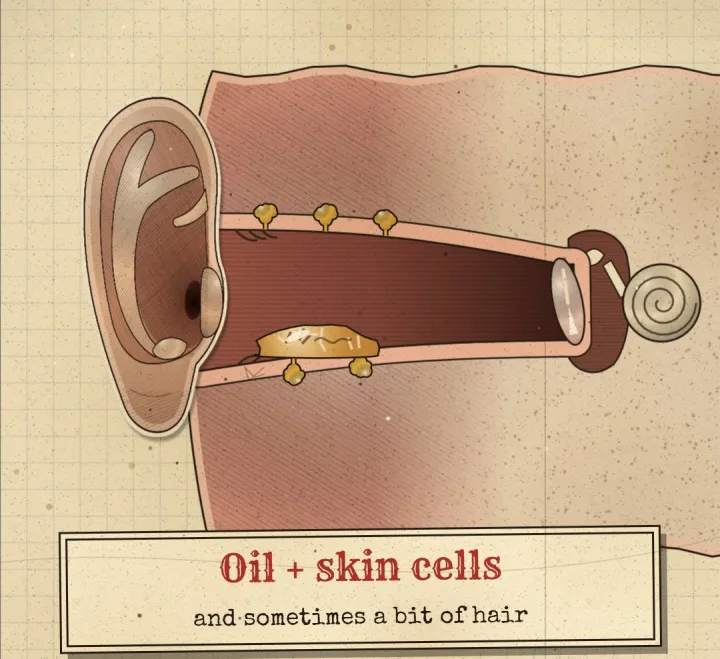
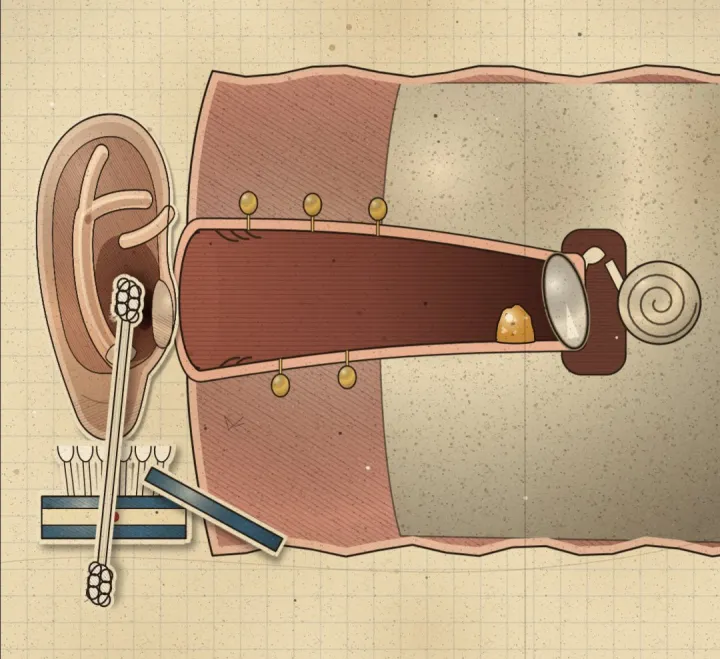
Tiny glands in the skin of your ear canal make a waxy oil. It mixes with dead skin cells and sometimes bits of hair.
What does it do?
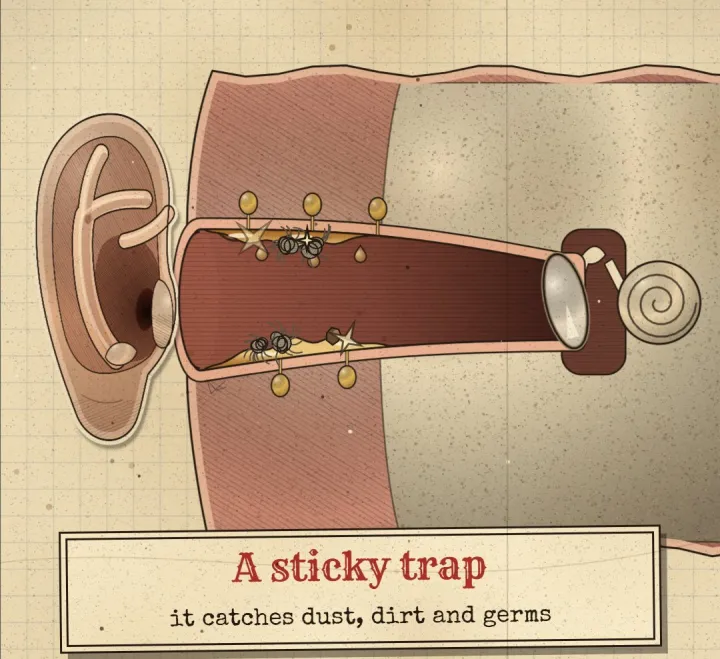
Earwax traps dust and dirt before they can reach your eardrum. It also helps fight germs and keeps your ears from drying out.
How does it get out?
The skin inside your ear canal slowly moves outward, like a conveyor belt. It carries old wax along with it. Chewing and talking move your jaw, which helps push the wax out. Cotton swabs can push wax deeper, so keep them out of your ear canal.
One more thing
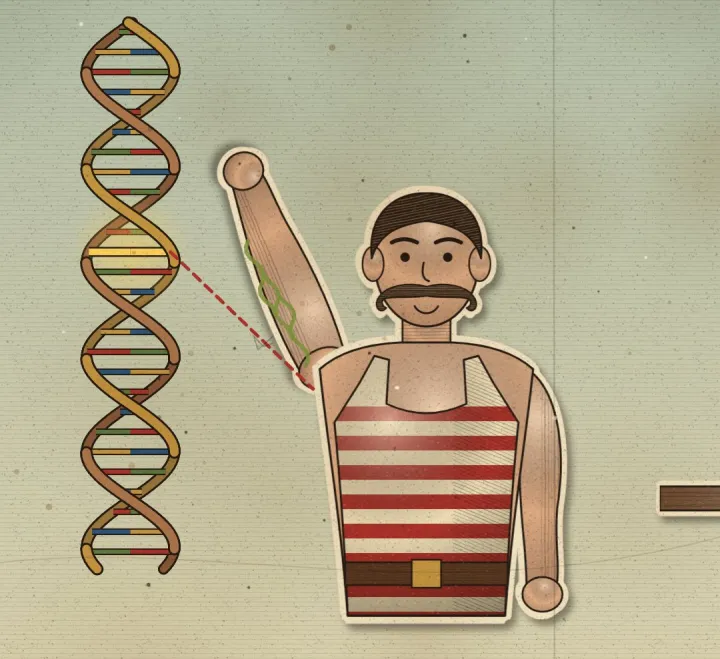
Whether your earwax is wet or dry depends on a single gene. That same gene also affects how much your armpits smell.
Sources
- Cleveland Clinic: Earwax (Cerumen): Types, Function & Causes
- NHS: Earwax build-up
- American Academy of Otolaryngology-Head and Neck Surgery Foundation: Clinical Practice Guideline (Update): Earwax (Cerumen Impaction), Schwartz et al.
- ENT Health: Earwax (Cerumen Impaction)
- MedlinePlus: Ear wax
- Nemours KidsHealth: Dealing With Earwax (Cerumen)
- Smithsonian Magazine: Ask Smithsonian: What's the Point of Earwax?
- Encyclopaedia Britannica: Why Do We Have Earwax?
- Encyclopaedia Britannica: Ear disease: Impacted earwax
- The Journal of Laryngology & Otology: The rate and pattern of otic epithelial migration: systematic review, Saniasiaya and Prepageran (2021)
- Nature Genetics: A SNP in the ABCC11 gene is the determinant of human earwax type, Yoshiura et al. (2006)
- Journal of Investigative Dermatology: A functional ABCC11 allele is essential in the biochemical formation of human axillary odor, Martin et al. (2010)
- Journal of Investigative Dermatology, University of Bristol: Dependence of deodorant usage on ABCC11 genotype, Rodriguez et al. (2013)
- Scientific American: People without Gene for Underarm Odor Still Wear Deodorant