
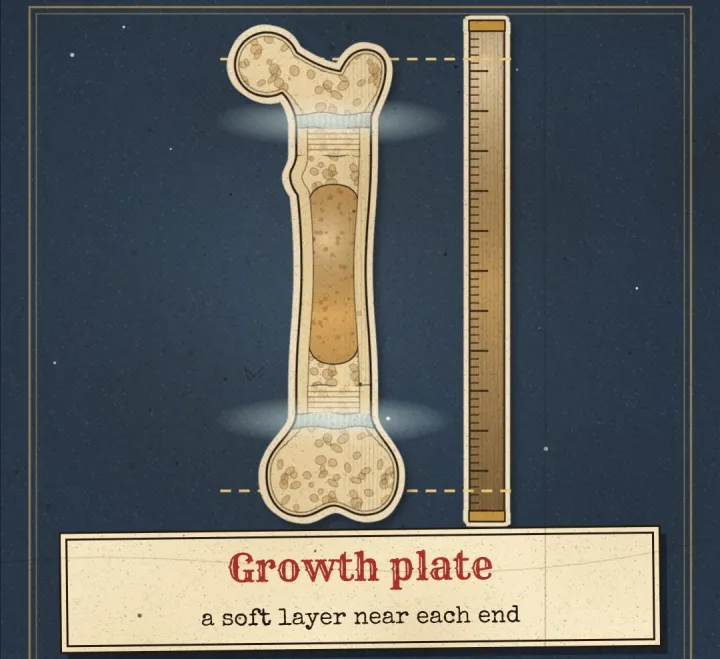
Leg bones grow longer at their ends, not in the middle. And those ends are also where growing stops.
How do bones get longer?
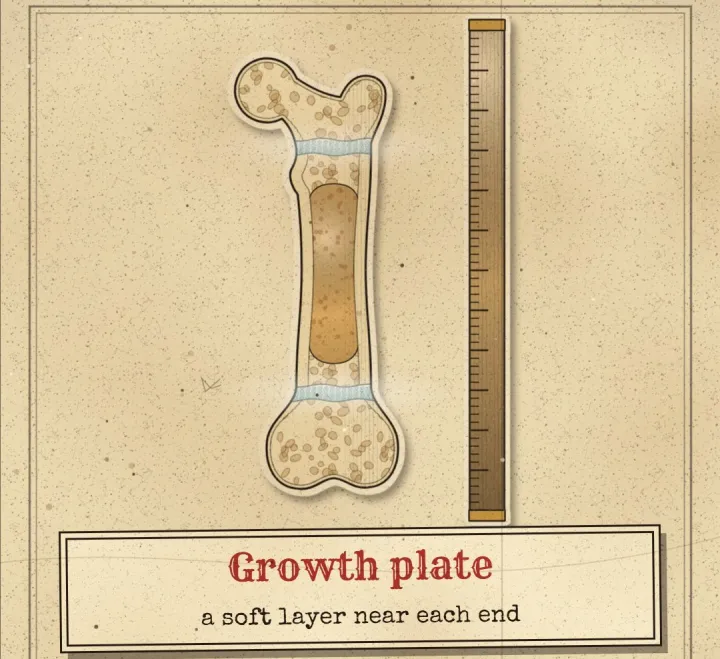
Near each end is a soft layer called a growth plate. New bone keeps forming there, so the bone gets longer.
Why does it stop?
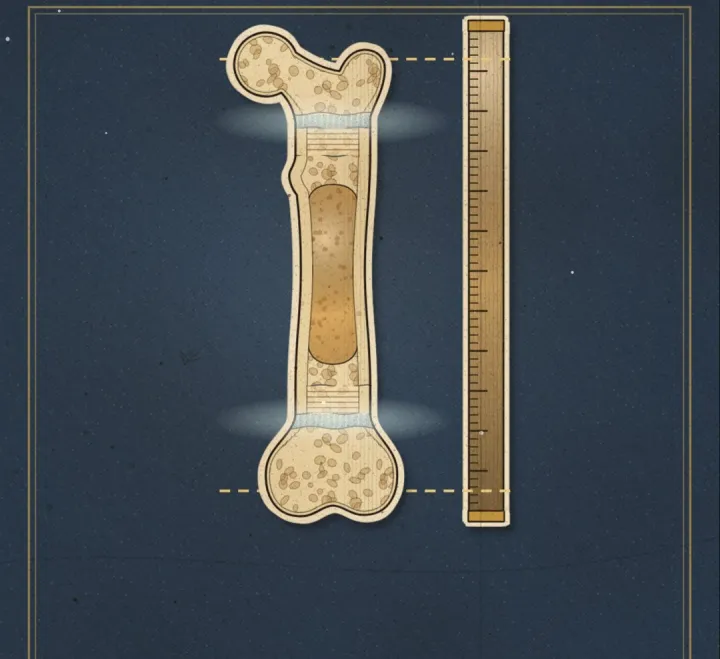
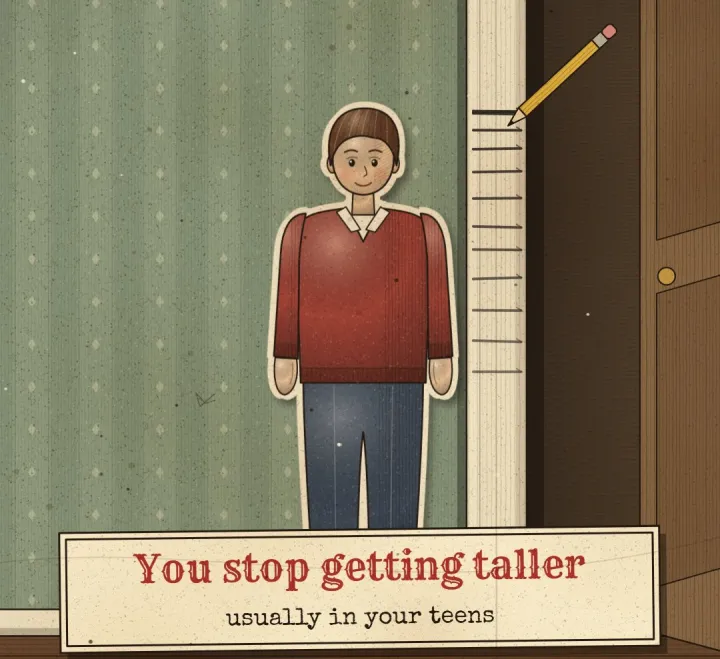
During puberty, hormones give you a growth spurt. But the same hormones also make the growth plates close. The soft layers turn into solid bone, and your bones stop getting longer. That is when you stop getting taller, usually in your teens.
Does your height still change?
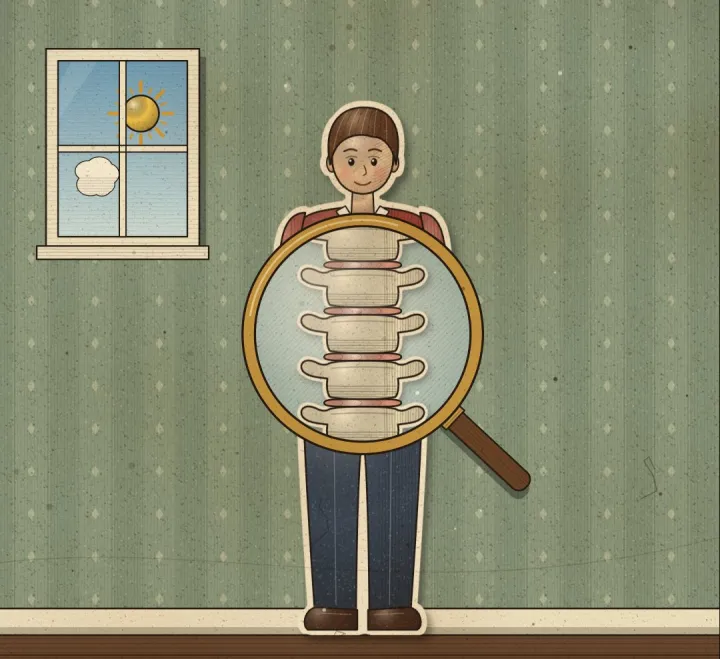
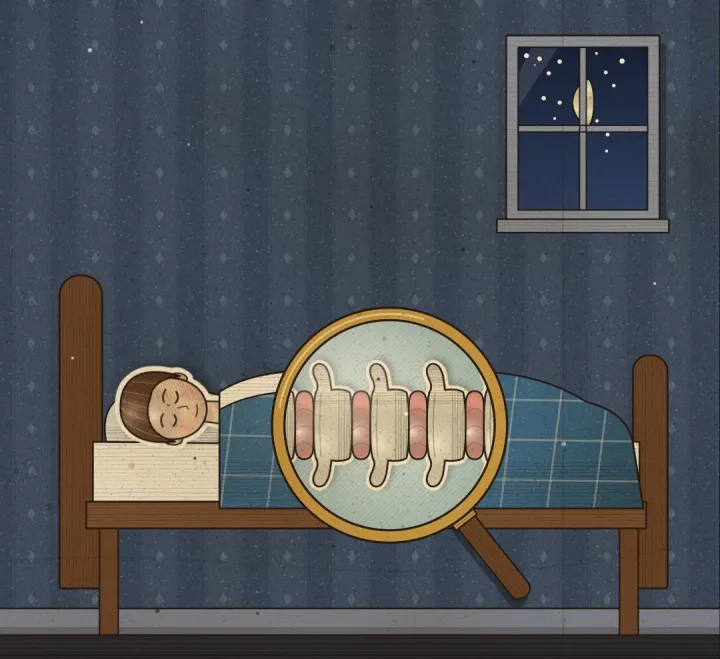
Even adults are a little taller in the morning than at night. During the day, your weight squeezes the soft cushions in your spine. At night, lying down lets them puff back up.
One more thing
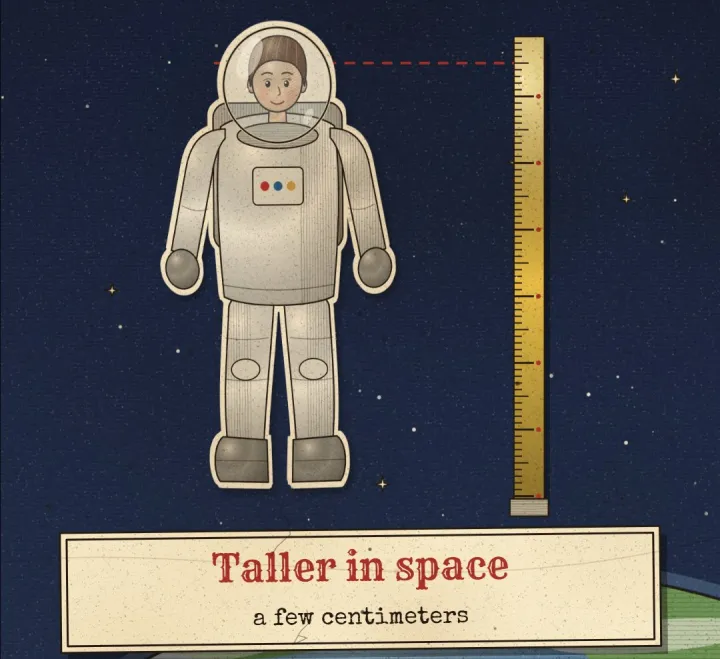
In space, with no weight pressing down, astronauts get a few centimeters taller.
Sources
- Nemours KidsHealth: Growth Plates
- NIAMS, National Institutes of Health: Growth Plate Injuries
- American Academy of Orthopaedic Surgeons: Growth Plate Fractures
- Cleveland Clinic: Salter-Harris Fracture (Growth Plate Fracture)
- Hormone Research in Paediatrics, 2011: Mechanisms of growth plate maturation and epiphyseal fusion
- Clinical Endocrinology, 2008: The role of sex steroids in controlling pubertal growth
- Journal of Steroid Biochemistry and Molecular Biology, 1997: The role of estrogen in bone growth and maturation during childhood and adolescence
- PNAS, 2001: Effects of estrogen on growth plate senescence and epiphyseal fusion
- Spine, 1985: Circadian variation in stature and the effects of spinal loading
- Spine, 1994: In vivo diurnal variation in intervertebral disc volume and morphology
- Journal of Bone and Joint Surgery, 1990: Diurnal changes in spinal mechanics and their clinical significance
- NASA: ISS Daily Summary Report 09/08/15 (SkinSuit investigation)
- Scientific American: Strange but True: Astronauts Get Taller in Space
- Spine, 2016: Lumbar Spine Paraspinal Muscle and Intervertebral Disc Height Changes in Astronauts After Long-Duration Spaceflight on the International Space Station
- Frontiers in Physiology, 2017: Spinal Health during Unloading and Reloading Associated with Spaceflight
- Yonsei Medical Journal, 1997: Diurnal variation in lumbar MRI. Correlation between signal intensity, disc height, and disc bulge