Poop gets its brown color from your old blood cells. Tiny helpers in your gut finish the job.
Where does the brown start?
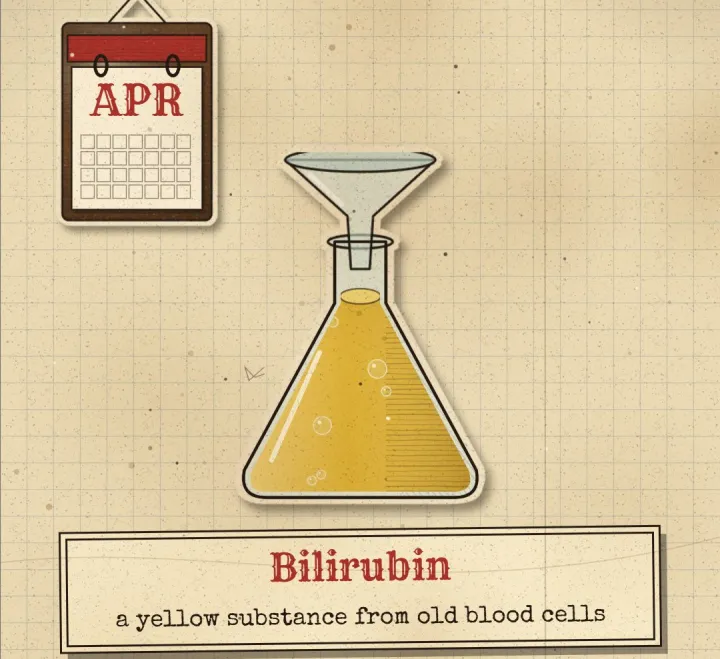
Red blood cells wear out after about 4 months. Your body breaks them down and makes a yellow substance called bilirubin.
How does it reach your poop?
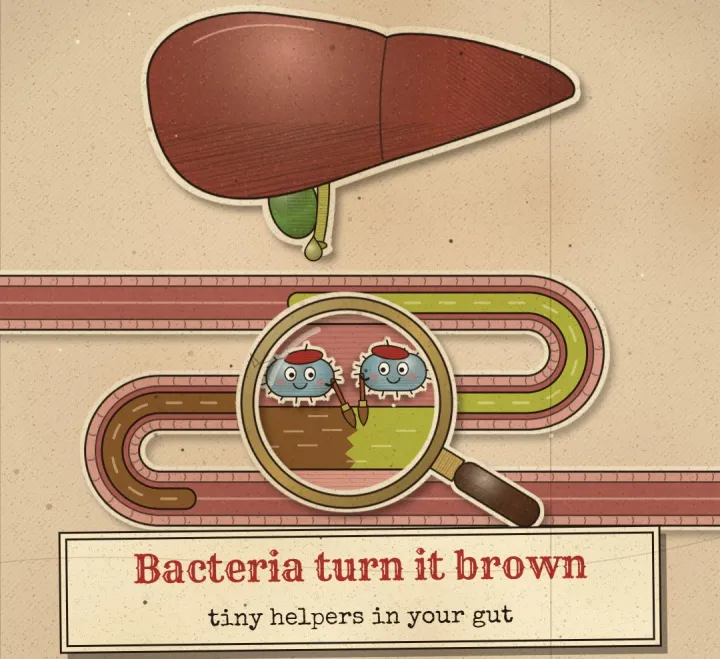
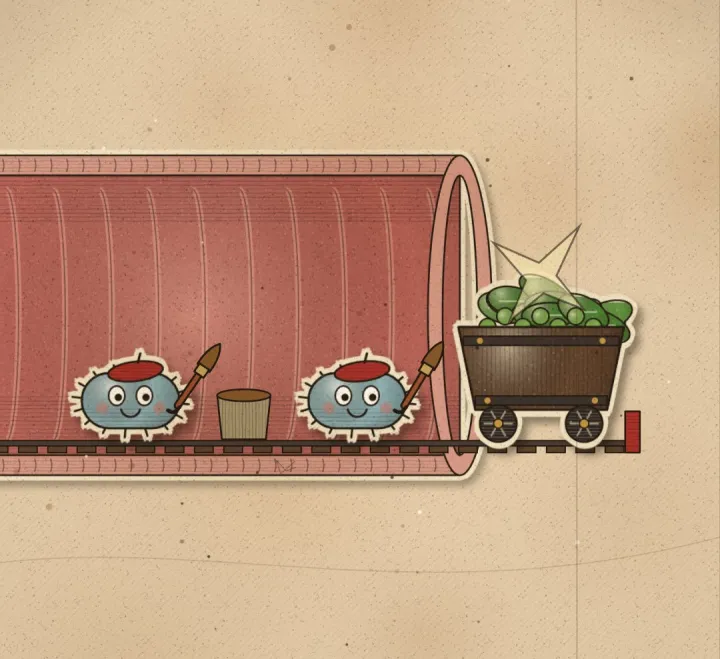
Your liver mixes it into bile, a liquid that helps you digest food. Bile flows into your gut, where tiny bacteria turn it brown.
Why does poop change color?
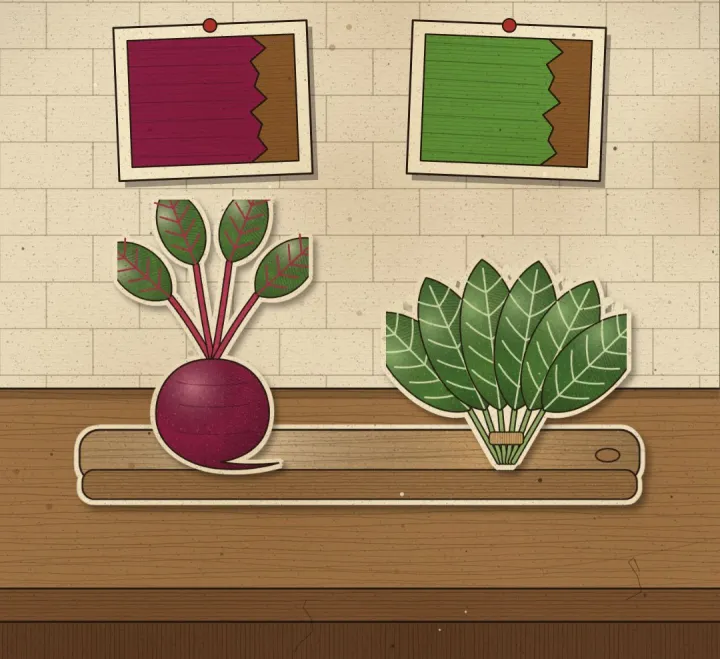
Some foods can change the color, like beets or leafy greens. If food rushes through too fast, poop can come out green.
One more thing
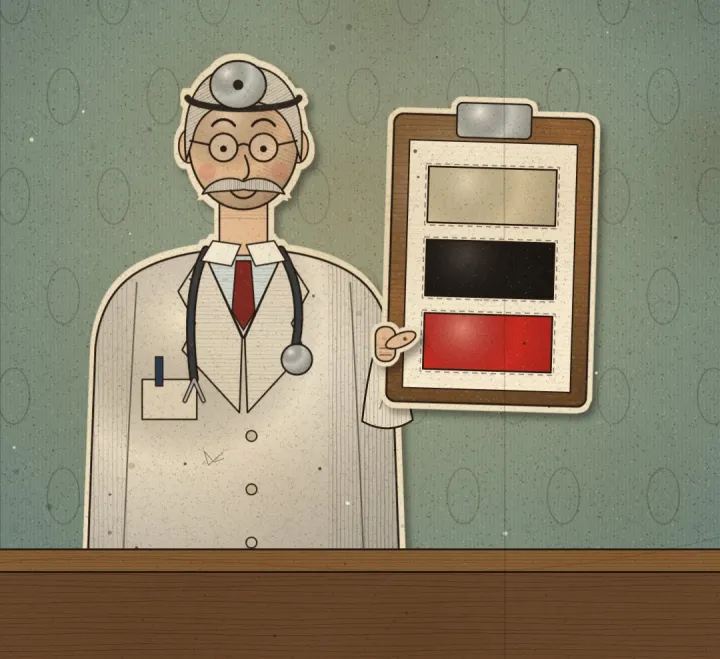
Without enough bile, poop can turn pale, almost like clay. Very pale, black or bright red poop should be checked by a doctor.
Sources
- American Society of Hematology: Blood Basics
- MedlinePlus: Hemolytic anemia: MedlinePlus Medical Encyclopedia
- MedlinePlus: Bilirubin Blood Test: MedlinePlus Medical Test
- Cleveland Clinic: Bilirubin Test: Understanding High vs. Low Levels & Causes
- Cleveland Clinic: Clay-Colored or Pale Stool: Causes & When To See a Doctor
- Cleveland Clinic: What Does My Stool (Poop) Color Mean?
- Mayo Clinic (Mayo Clinic Health Information Library text, read on Koc University Hospital, a Mayo Clinic Care Network member, because mayoclinic.org blocked the fetch tool; original: mayoclinic.org/healthy-lifestyle/consumer-health/expert-answers/stool-color/faq-20058080): Stool color: When to worry
- BBC Science Focus: Why is poo always brown, no matter what we eat?
- The Conversation, 2019: Why is my poo green?
- Cleveland Clinic: Adult Jaundice: What It Is, Symptoms, Causes & Treatment
- University of Maryland with NIH: What makes urine yellow? UMD scientists discover the enzyme responsible