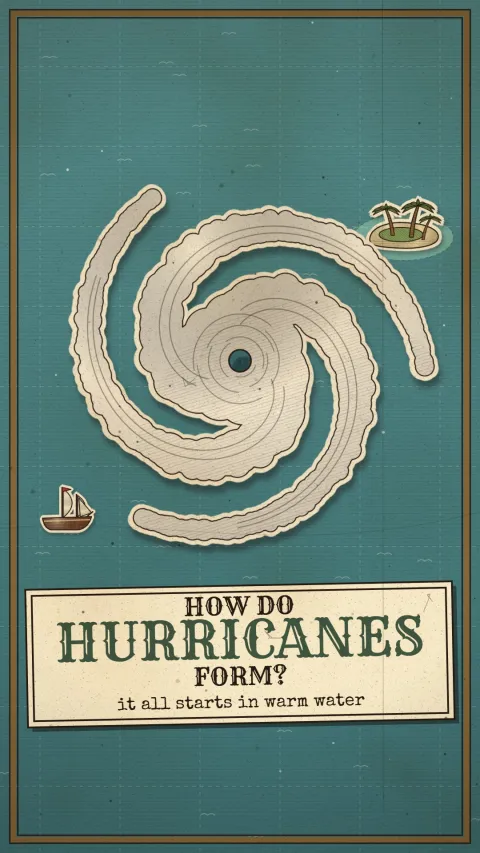
A hurricane can be hundreds of kilometers wide. Its power hides in water you could swim in.
What does it need?
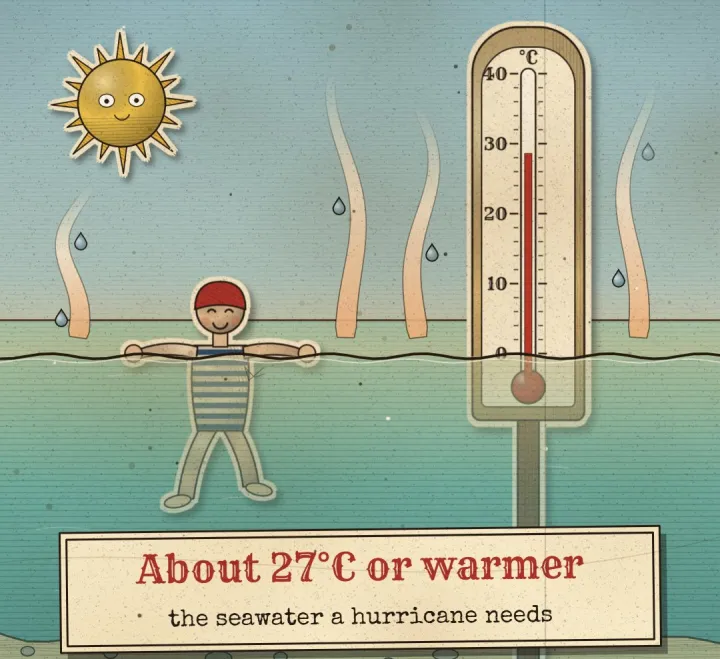
It needs seawater of about 27°C or warmer. The warm sea heats the air above and makes it moist.
Why does it grow?
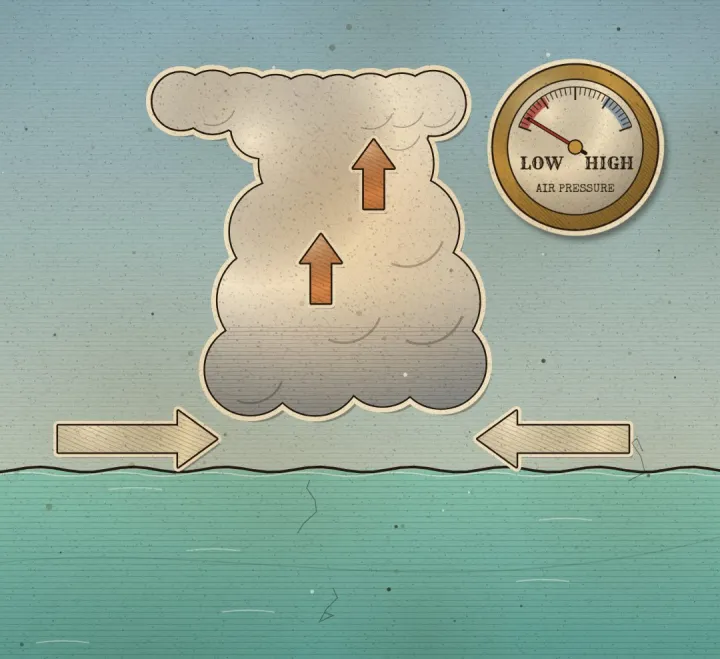
As that air rises and cools, it forms towering storm clouds. Making those clouds gives off heat, so the air rises even faster. The rising air leaves low pressure below, so more air rushes in.
Why does it spin?
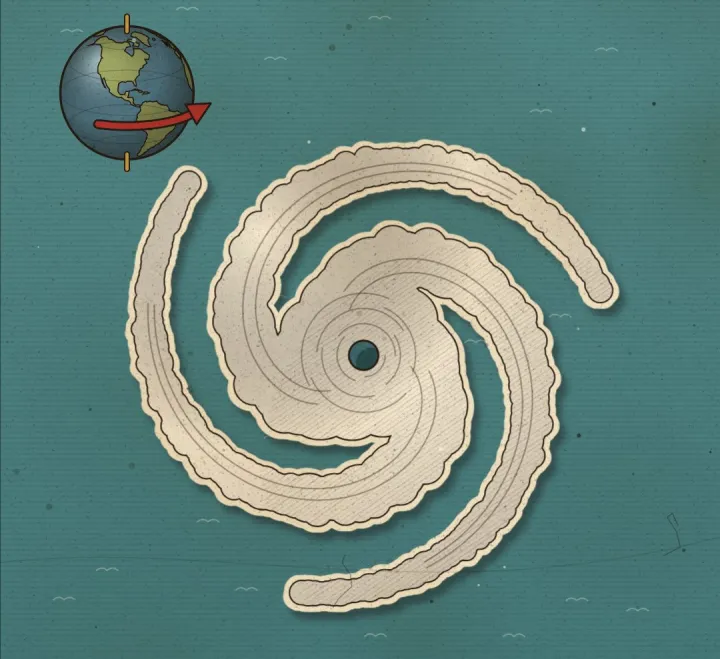
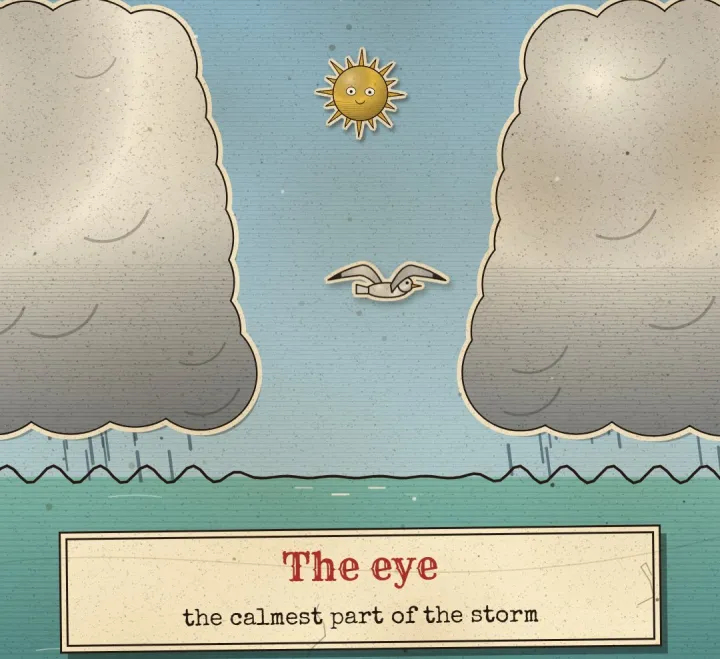
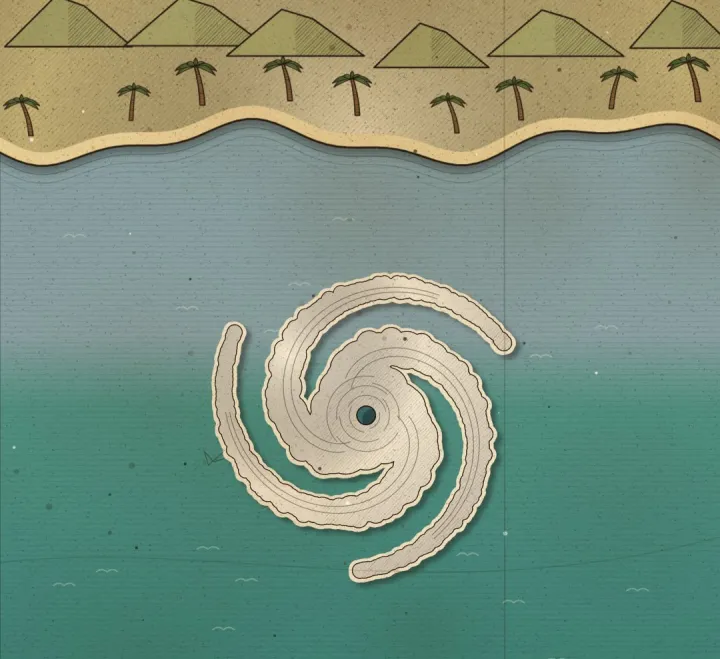
Earth's spin bends that incoming air into a giant spiral. In the middle is the eye, the calmest part of the storm.
What stops it?
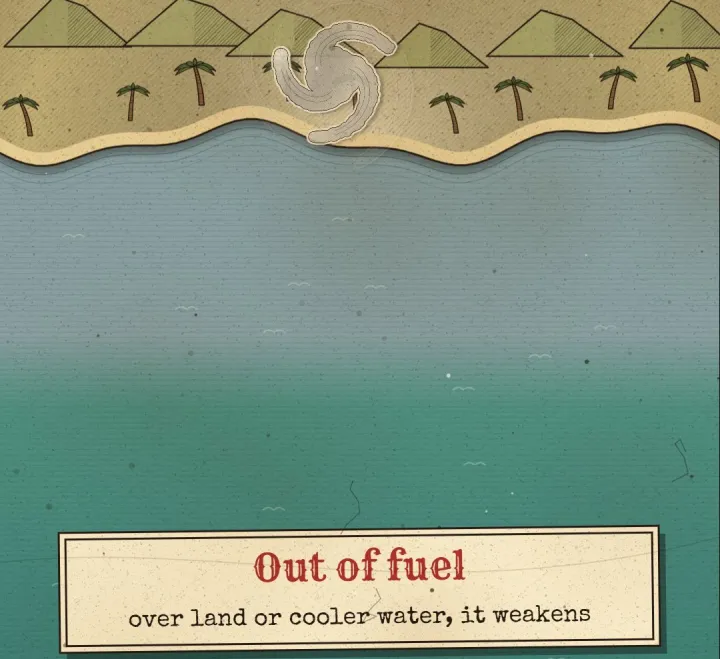
Over land or cooler water, the hurricane stops getting warm, moist air. Without that fuel, the storm weakens.
One more thing
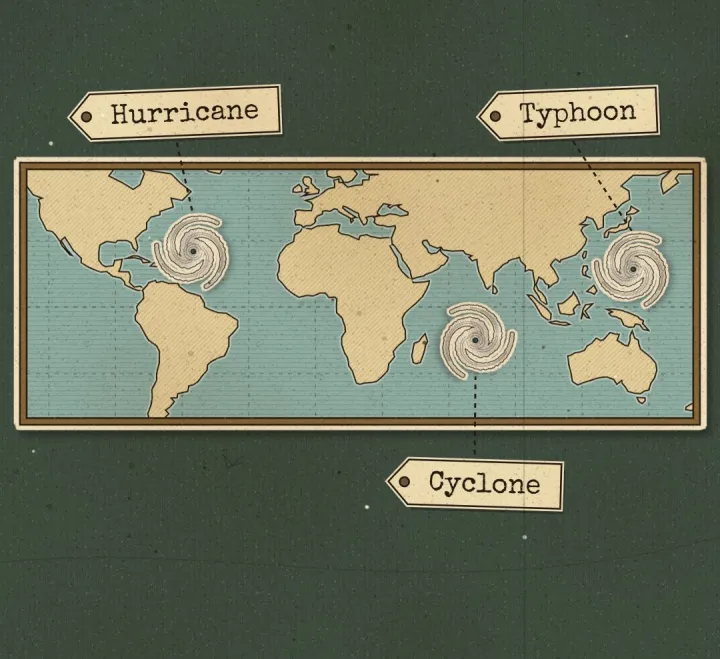
Typhoons and cyclones are the same kind of storm, just in other parts of the world.
Sources
- NASA Space Place: How Do Hurricanes Form?
- NOAA: Tropical Cyclone Introduction
- NOAA: Tropical Cyclone Structure
- Met Office: What are hurricanes?
- Met Office: Development of tropical cyclones
- Met Office: Location of tropical cyclones
- NASA Earth Observatory: Hurricanes: The Greatest Storms on Earth
- UCAR Center for Science Education: How Hurricanes Form
- University of Rhode Island (Hurricanes: Science and Society): Hurricane Structure
- NOAA National Ocean Service: What is the difference between a hurricane and a typhoon?
- NOAA NESDIS: How Does a Hurricane Form?
- Environment and Climate Change Canada: Hurricanes: Structure and Motion