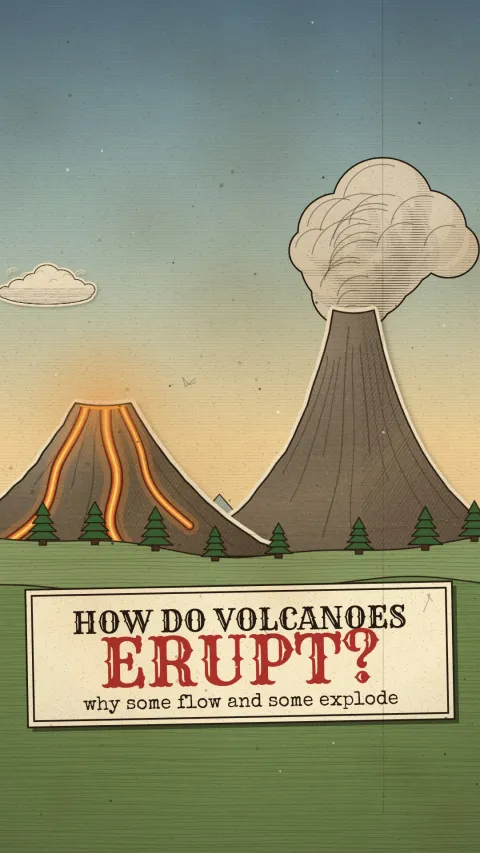
Some volcanoes pour out glowing rivers of lava, while others explode. It depends on the gas hidden inside melted rock.
What is under a volcano?
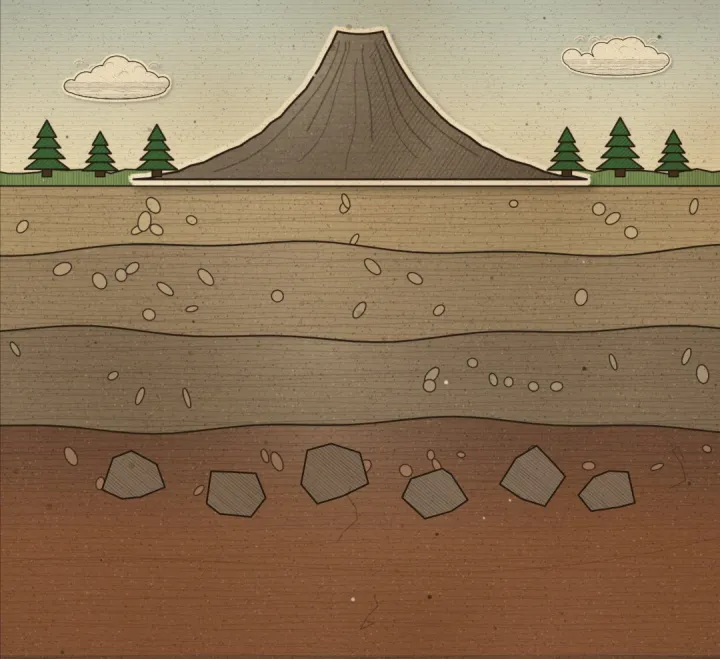
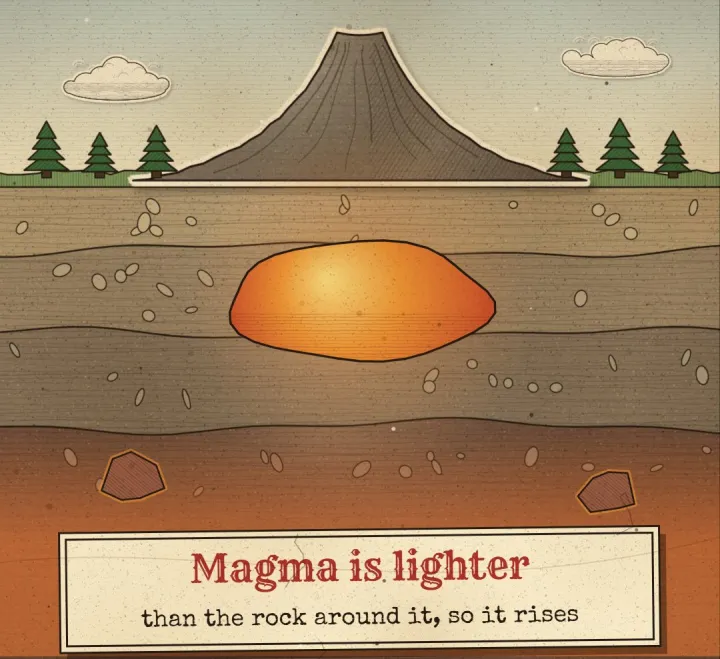
Deep underground, it is so hot that some rock melts into magma. Magma is lighter than the rock around it, so it rises. It usually collects in a magma chamber under the volcano.
What pushes it up?
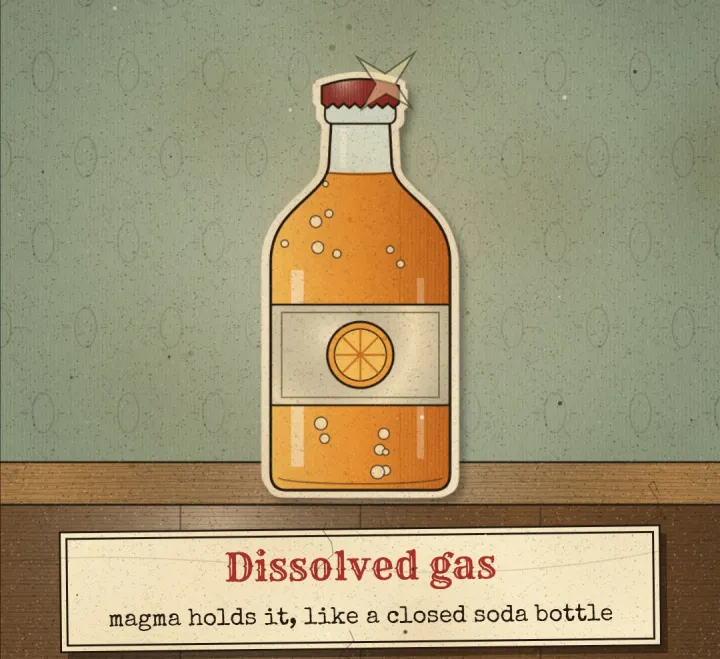
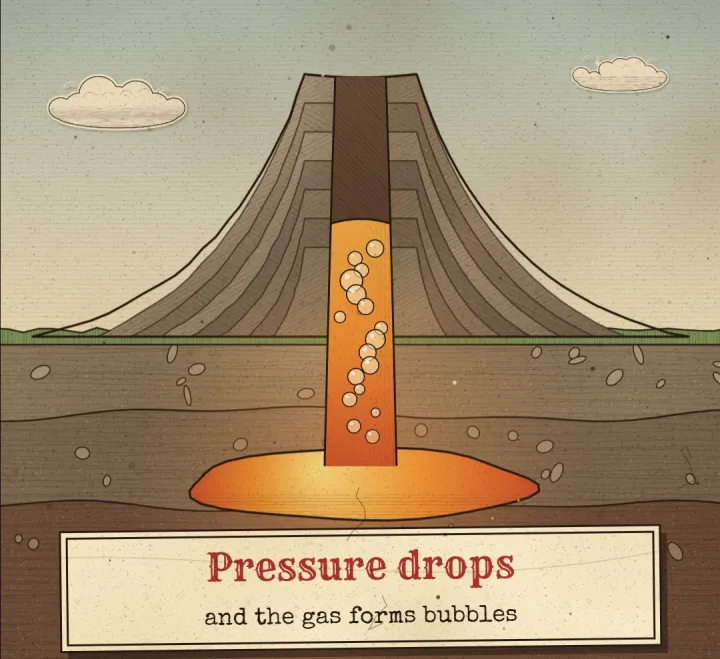
Magma holds dissolved gas, like a closed bottle of soda. As magma rises, the pressure drops, and the gas forms bubbles. The growing bubbles push the magma upward.
Why do some explode?
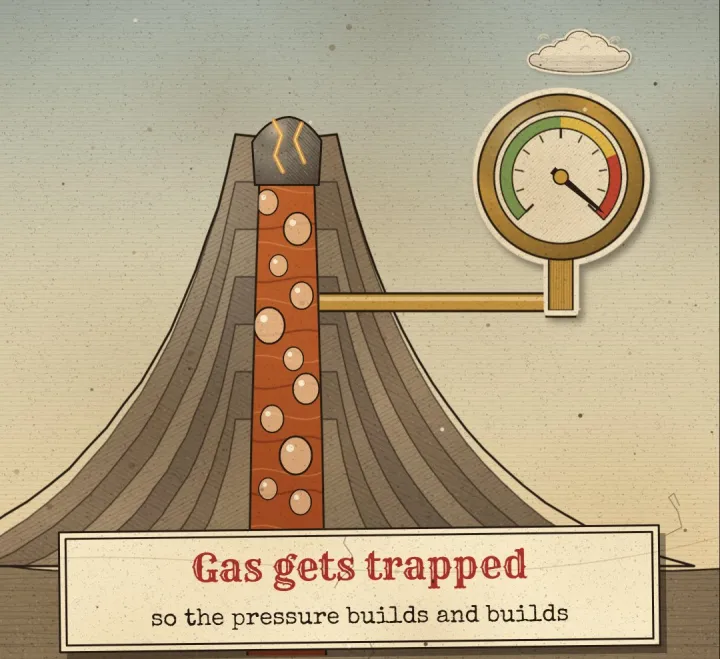
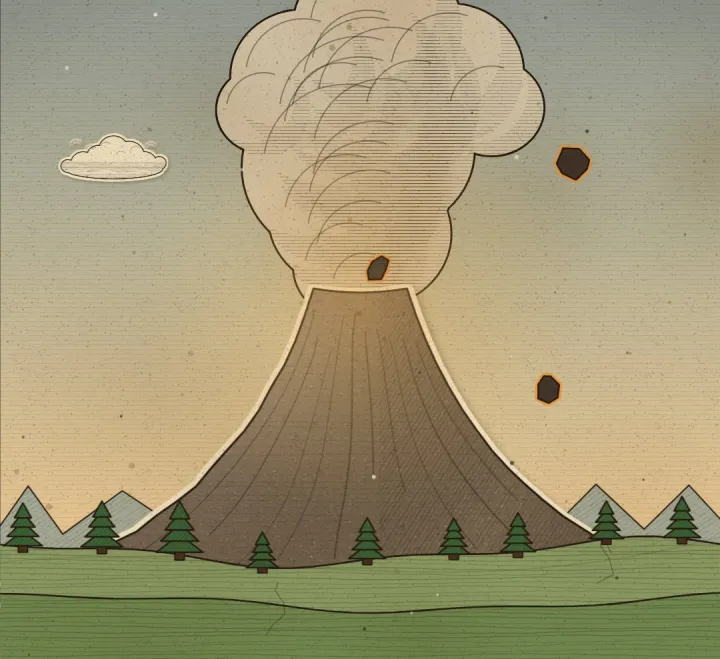
In runny magma, gas escapes easily, so lava simply flows out. Thick, sticky magma traps the gas, so the pressure builds and builds. Finally, the gas blasts out, shattering the magma into ash and rock.
One more thing
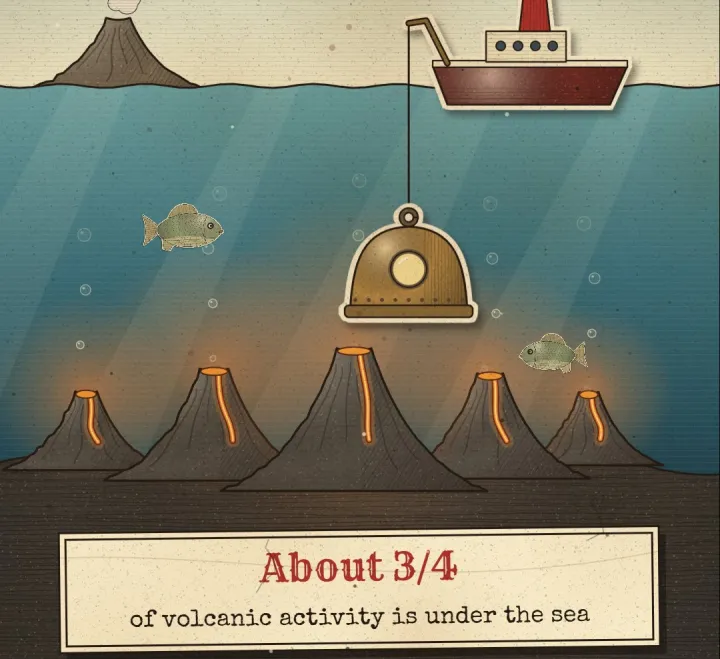
But about three-quarters of Earth's volcanic activity is hidden deep under the sea.
Sources
- USGS: How Do Volcanoes Erupt?
- USGS Volcano Hazards Program: Volcanic gases can be harmful to health, vegetation and infrastructure
- British Geological Survey: Types of volcano
- British Geological Survey: How volcanoes form
- British Geological Survey: Eruption styles
- Oregon State University, Volcano World: Eruption Styles
- Oregon State University, Volcano World: Volcanic Gases
- National Geographic: Volcano facts and information
- NASA Space Place: What Is a Volcano?
- Geoscience Australia: Volcano
- NOAA Ocean Exploration: Do volcanic eruptions happen underwater?
- USGS Hawaiian Volcano Observatory: Volcano Watch: Ruby seamount, a glimpse into the secret life of a submarine volcano
- National Geographic Education: Magma
- USGS: Volcanoes are Mighty Mountains (General Information Product 323)
- Oregon State University, Volcano World: Volcanic Lightning
- Scientific Reports: The Elusive Evidence of Volcanic Lightning
- Geological Society of London
- Oregon State University, Volcano World