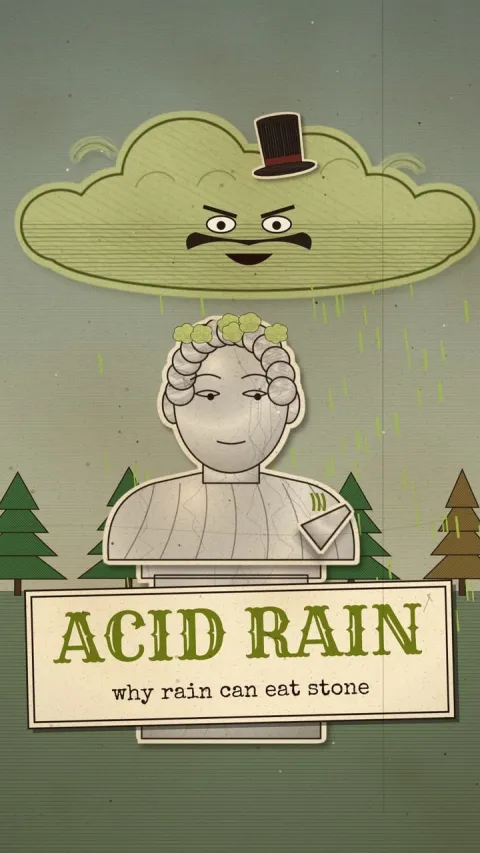
Rain that dissolves stone, harms fish, and strips forests bare? That is acid rain. Here is how it works.
What is acid rain?
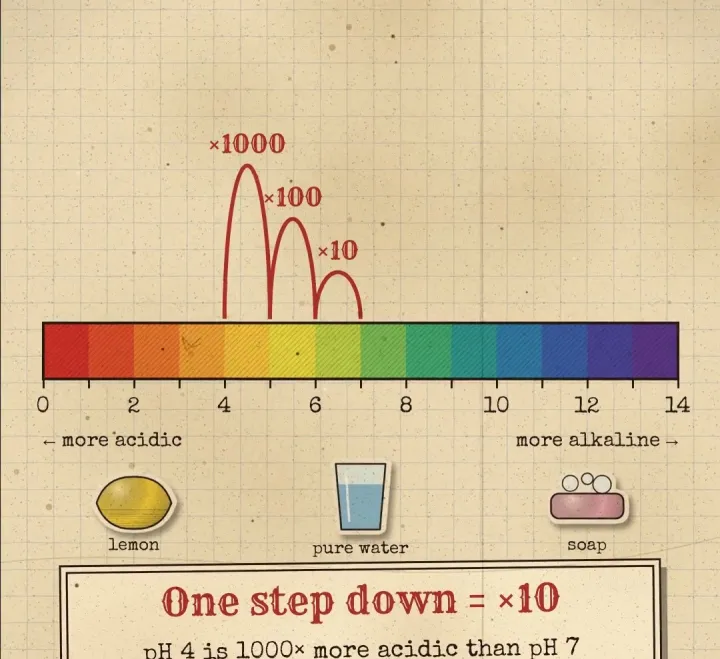
All rain is slightly acidic, but pollution can make it 10 times more acidic, or even worse. On the pH scale, every step down means 10 times more acid.
How does it form?
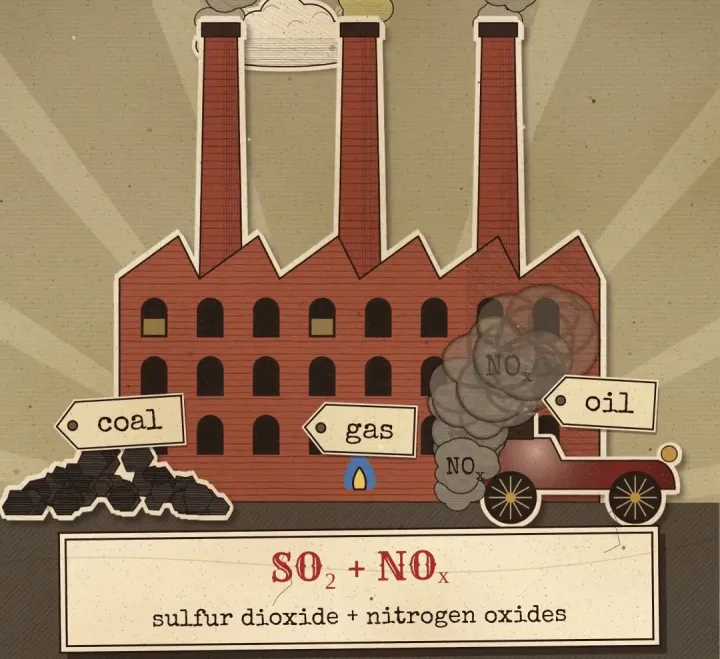
It all starts when we burn coal, oil, and gas. Power plants, factories, and cars release two gases: sulfur dioxide and nitrogen oxides. Behind the clouds, these gases react with water and oxygen and turn into sulfuric and nitric acid. Winds can carry them hundreds of kilometers before they fall as rain, snow, or fog.
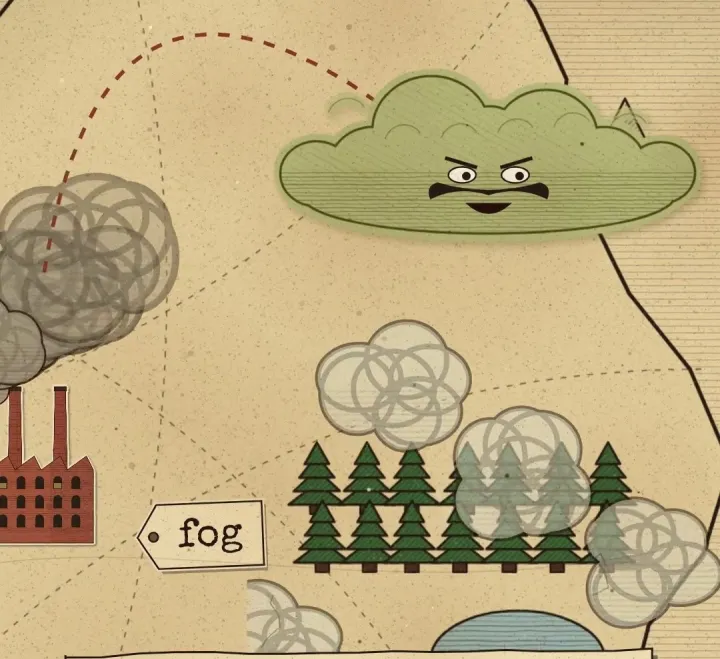
What does it damage?
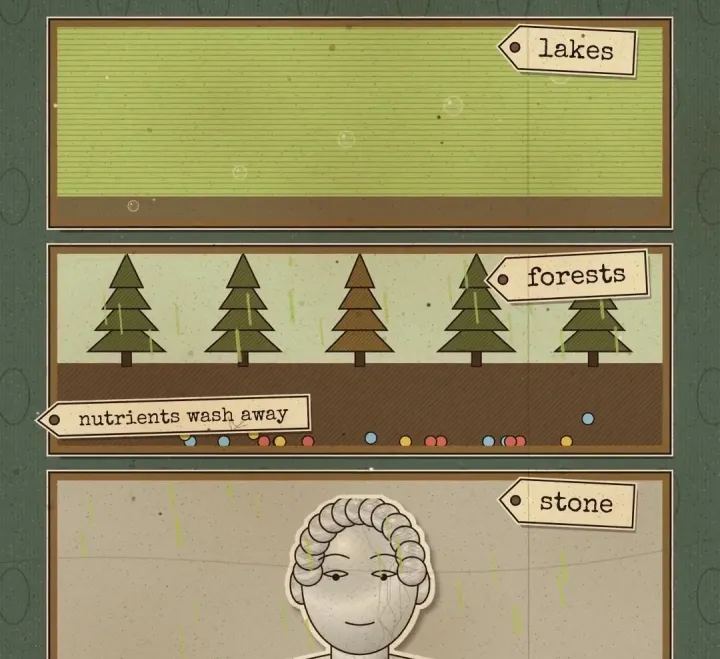
Lakes turn acidic and fish struggle to survive. Forests lose nutrients from the soil and slowly weaken. And marble and limestone buildings dissolve, grain by grain. In the 1980s, whole mountain forests died where Germany, Poland, and the Czech Republic meet.

Can we fix it?
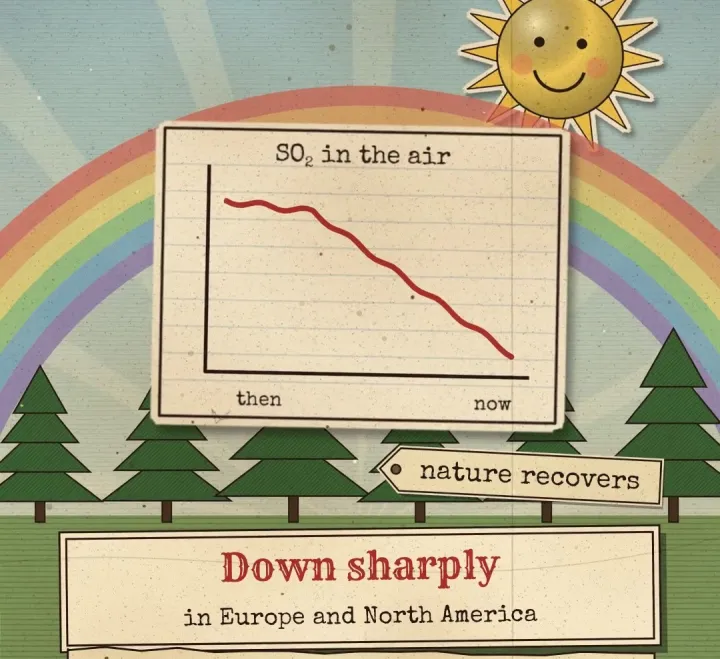
The good news? We fixed a lot of it. Filters called scrubbers catch sulfur in chimneys, and cleaner fuels cut emissions. Since then, acid rain has dropped sharply in Europe and North America, and nature is recovering.