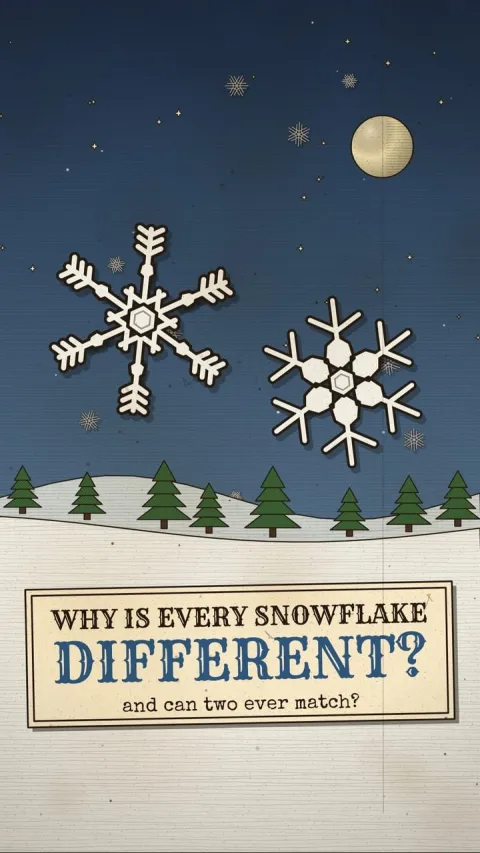
Why is every snowflake different? The answer is hidden in its journey down.
How does a snowflake start?
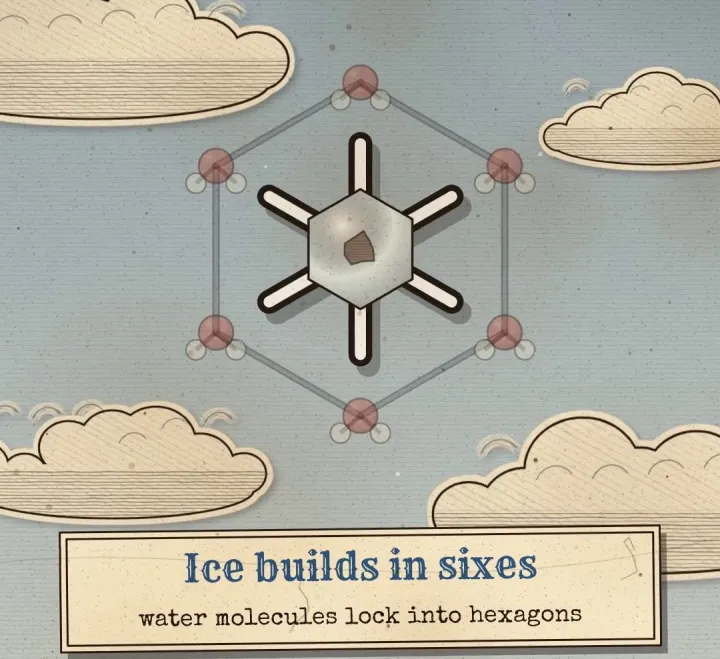
High in a cloud, water freezes onto a tiny speck of dust. The water molecules lock together in a six-sided pattern. That is why most snowflakes have six sides.
How does it grow?
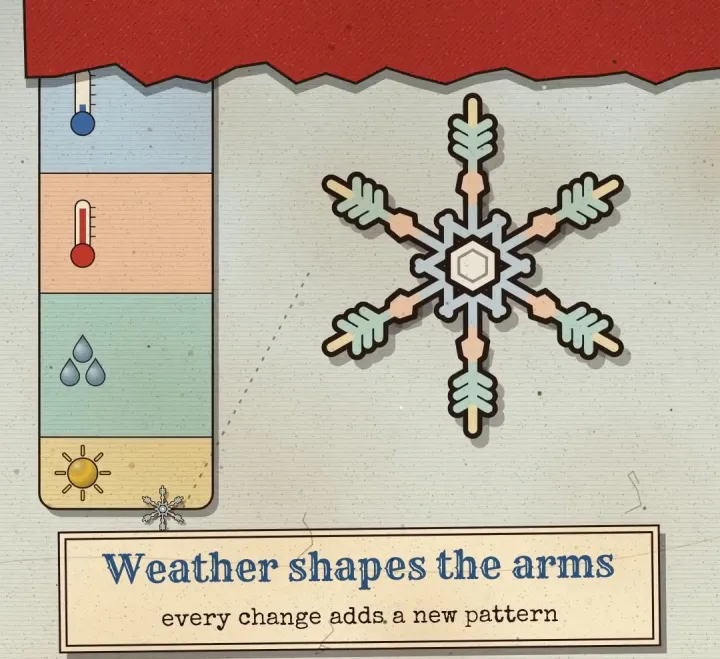
As it falls, the crystal meets air that is colder, warmer, wetter, or drier. Each change makes its arms grow in a new way. All six arms feel the same change at the same time, so they grow almost alike.
Why is every one different?
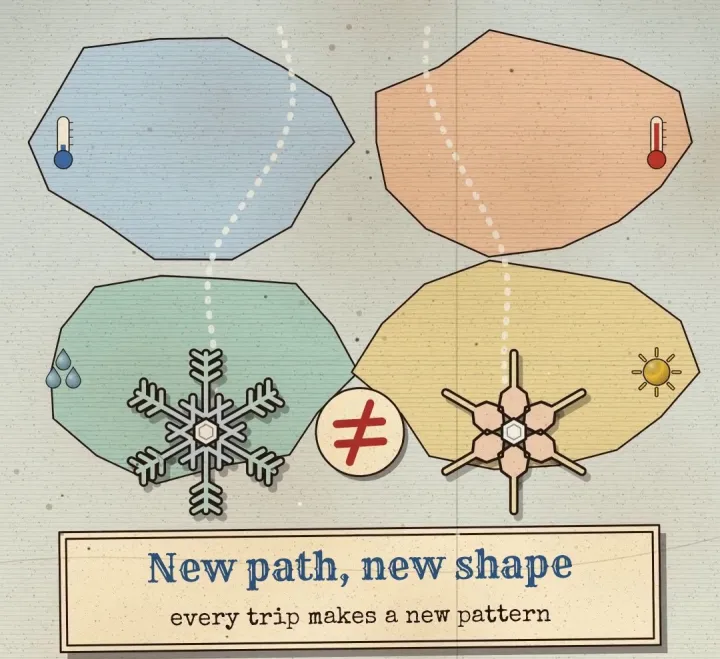
But no two snowflakes take exactly the same path. So each one gets its own mix of weather and its own shape. That makes finding two exactly alike almost impossible.
Can two ever match?
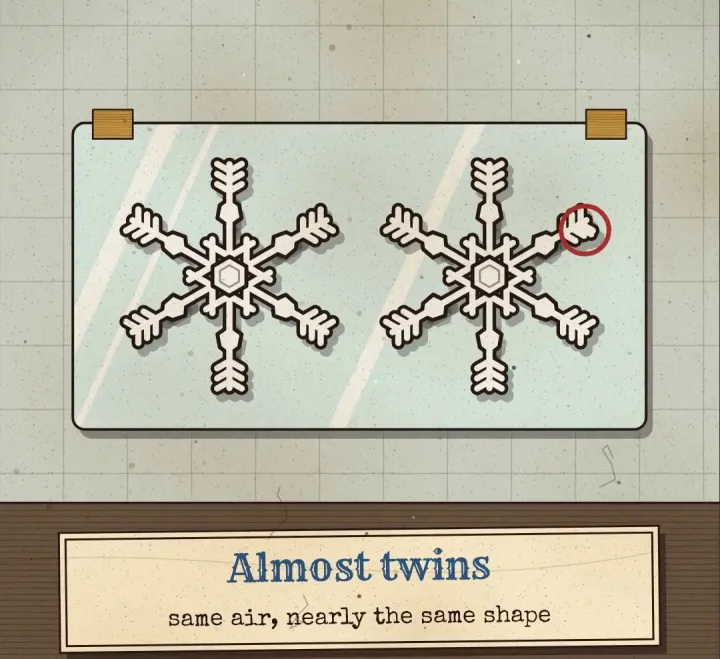
In a lab, scientists can grow twin snowflakes side by side. With the same air, they look almost identical, but still not exactly alike.
Sources
- NOAA: How do snowflakes form?
- Wikipedia: Snowflake
- Fox Weather: How do snowflakes form, and why are they all unique?
- PRWeb: Two snowflakes can be alike, in this Caltech physicist's lab
- Salon: Caltech physicist growing designer snowflakes
- Forbes, Ask Ethan: Could you have two perfectly identical snowflakes?
- Wikipedia: Kenneth G. Libbrecht
- PBS: Identical snowflakes
- Geology.com: Why is every snowflake different?
- University at Buffalo: The chemistry of snowflakes
- ScienceABC: Why do snowflakes have such fascinating shapes?
- EarthDate: How snowflakes grow